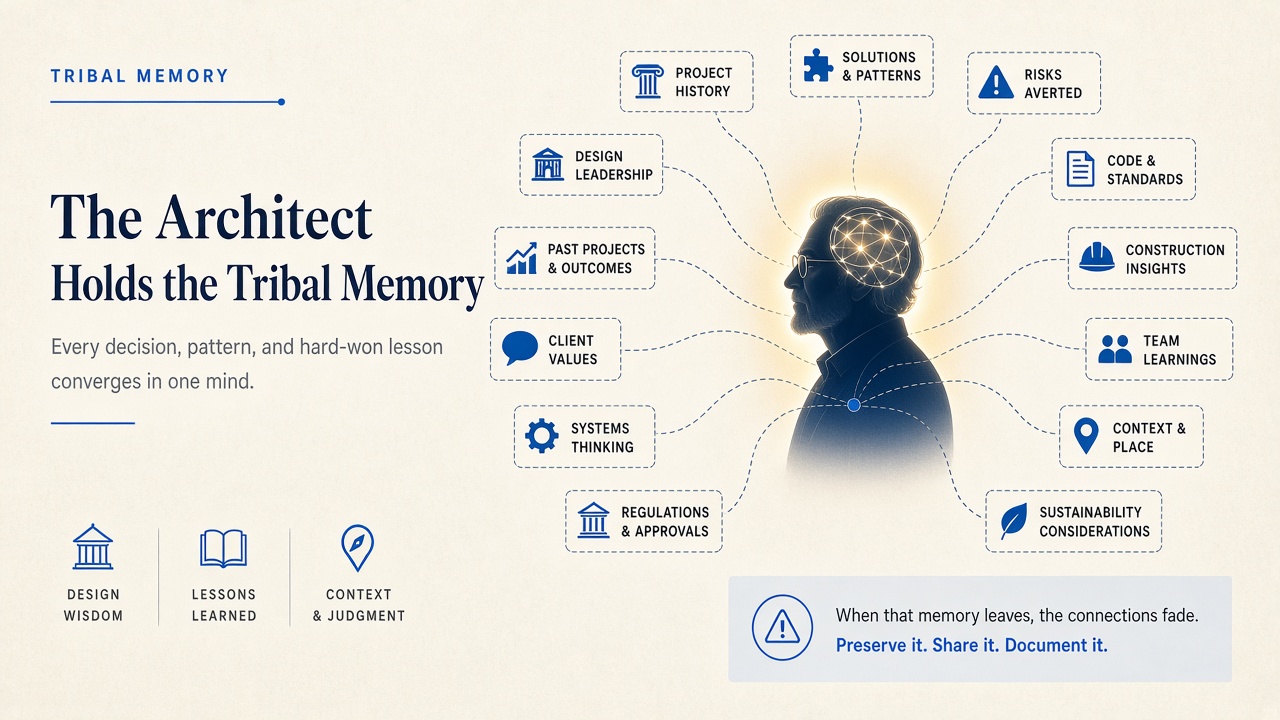
What does “let me check with Dave” really mean?
It means the organisation’s real dependency map is not in the system of record. Hard questions — blast radius, integration history, “why is it like this?” — route to a person, not a curated model. That is tribal knowledge with a friendly nickname, and a serious bus factor.
People ask (and search): who knows how our systems talk, key person risk in architecture, why can’t we answer impact questions without meetings. Those are symptoms of missing shared How and Why — not of missing another spreadsheet column.
Why do repositories fail the questions leaders ask?
Most EA inventories answer “what applications do we have?” They struggle with “what breaks if we change this?” because behaviour and rationale never entered the model. So every tough question escalates.
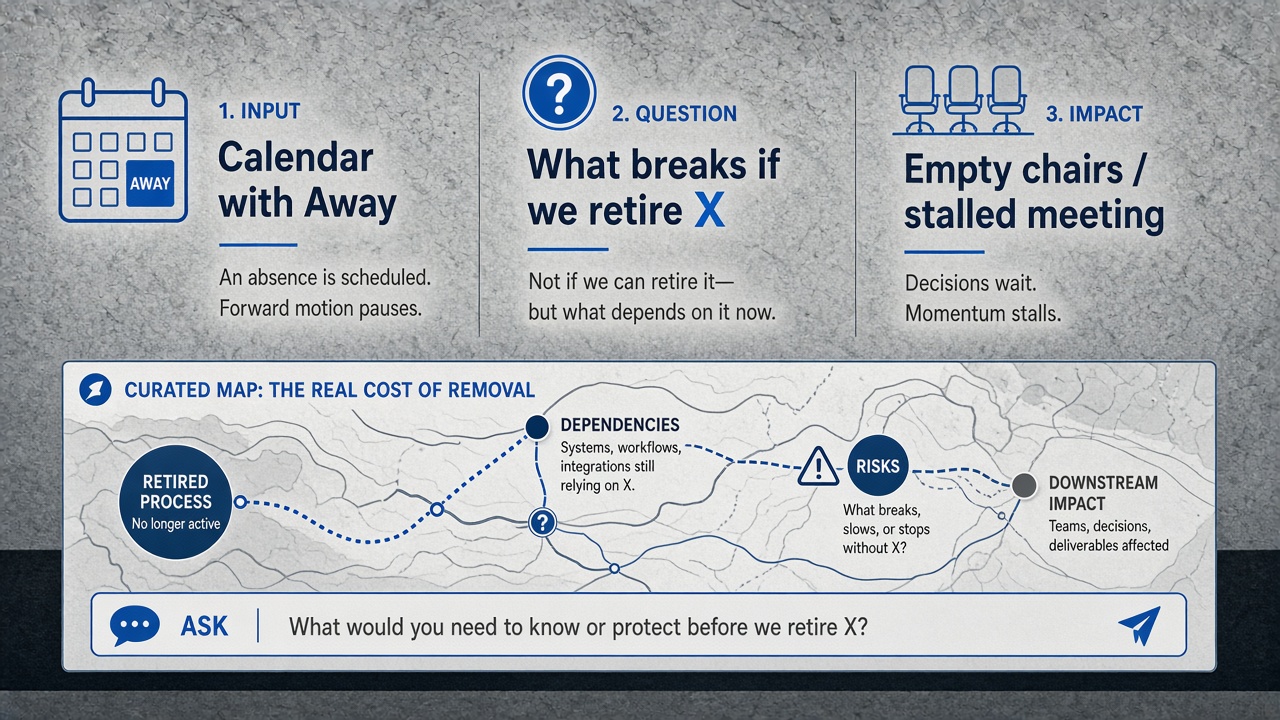
Is tribal knowledge the same as institutional memory?
Tribal knowledge is institutional memory trapped in people. Useful institutional memory is curated, shared, and queryable — with evidence — so decisions do not wait on one expert’s calendar. See also why EA factsheets miss the How and Why.
What changes when context is living and askable?
Teams stop queuing on Dave for every blast-radius question. Leaders get map-grounded answers with citations. Experts spend time curating and deciding — not being the only search engine. That is the job of Enterprise Ask on a curated landscape.
How does DecisionPen solve this?
DecisionPen turns tribal memory into curated, shared context so hard questions hit the map — not Dave’s calendar.
- Living landscape — applications, integrations, and capabilities stay in a metamodel people actually trust because it is updated from real work, not a one-off baseline.
- How/Why on the record — evidence stays bound to entities so “why is it like this?” has a source, not a rumour.
- Map-grounded Ask — Enterprise Ask answers impact and dependency questions with citations from curated context — the opposite of an ungoverned chatbot over Confluence (why not plain RAG).
- Experts curate, they don’t queue — SMEs review agent proposals and enrich the map instead of being the only search engine.
Bring the documents and people who currently are the memory into a trial workspace and make that knowledge reusable.
When is DecisionPen not the right tool?
When your primary need is freeform diagramming or BPMN drawing. Use Visio or Lucidchart for that. DecisionPen keeps living context and generates views; it is not a canvas replacement.