DecisionPen Overview — 90 seconds
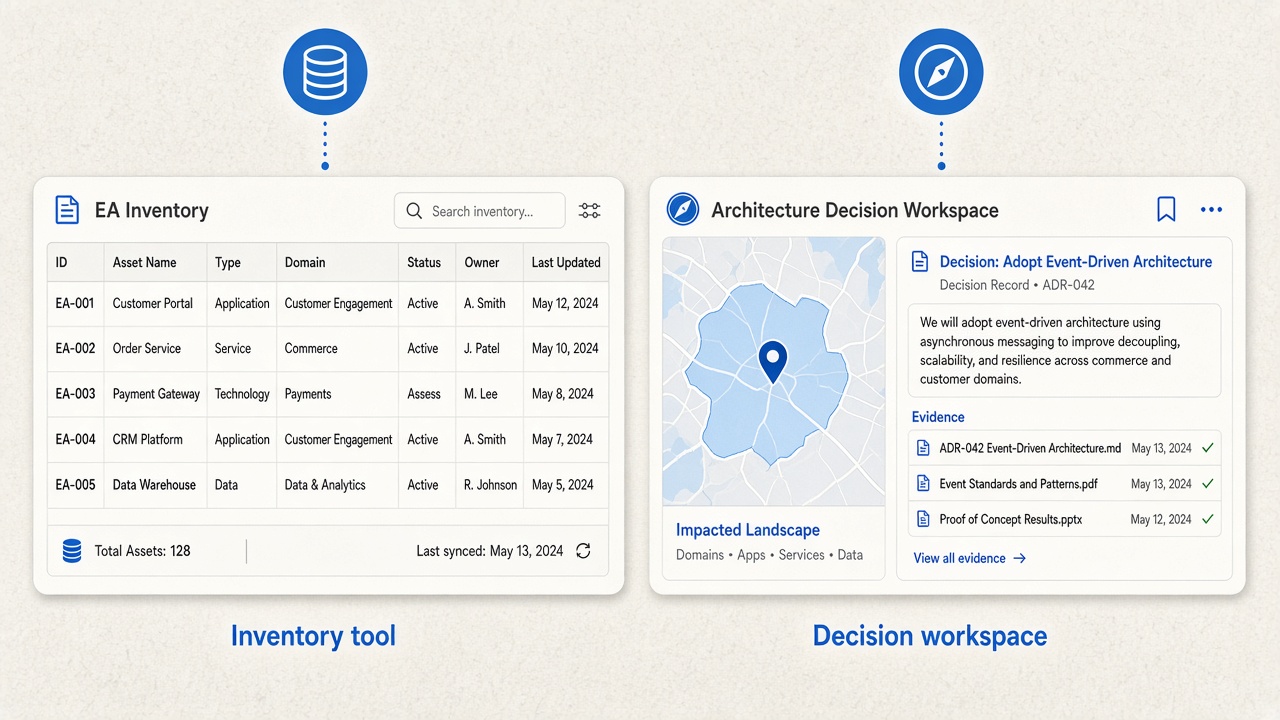
Think ChatGPT or Gemini — but for your enterprise architecture. See how DecisionPen works as an Architecture Decision Workspace.
Ready to try it yourself?
See it liveShort proofs, deeper walkthroughs, and the Living EA series — question-led essays built for practitioners, search, and AI agents.
Agents: start at llms.txt or the Markdown primer. Authoritative docs: /docs.
Site sells the story — these clips prove the product.
Think ChatGPT or Gemini — but for your enterprise architecture. See how DecisionPen works as an Architecture Decision Workspace.
Ready to try it yourself?
See it liveA short introduction to DecisionPen — architecture knowledge that keeps pace with change.
Ready to try it yourself?
See it liveFollow the Customer Payments Hub path: from knowledge to a curated map you can interrogate.
Ready to try it yourself?
See it live42 question-led essays — each with FAQ schema, a concrete “how DecisionPen solves this” section, and a plain-text Markdown mirror under /llms/blog/.
Inside an Architecture Decision Workspace, AI is a loop — ingest, propose, bind evidence, human curation, then Ask and publish from the curated map — not a chat box over documents. A capstone map of what AI does, what it does not, and how it feeds shaped context and agentic delivery.
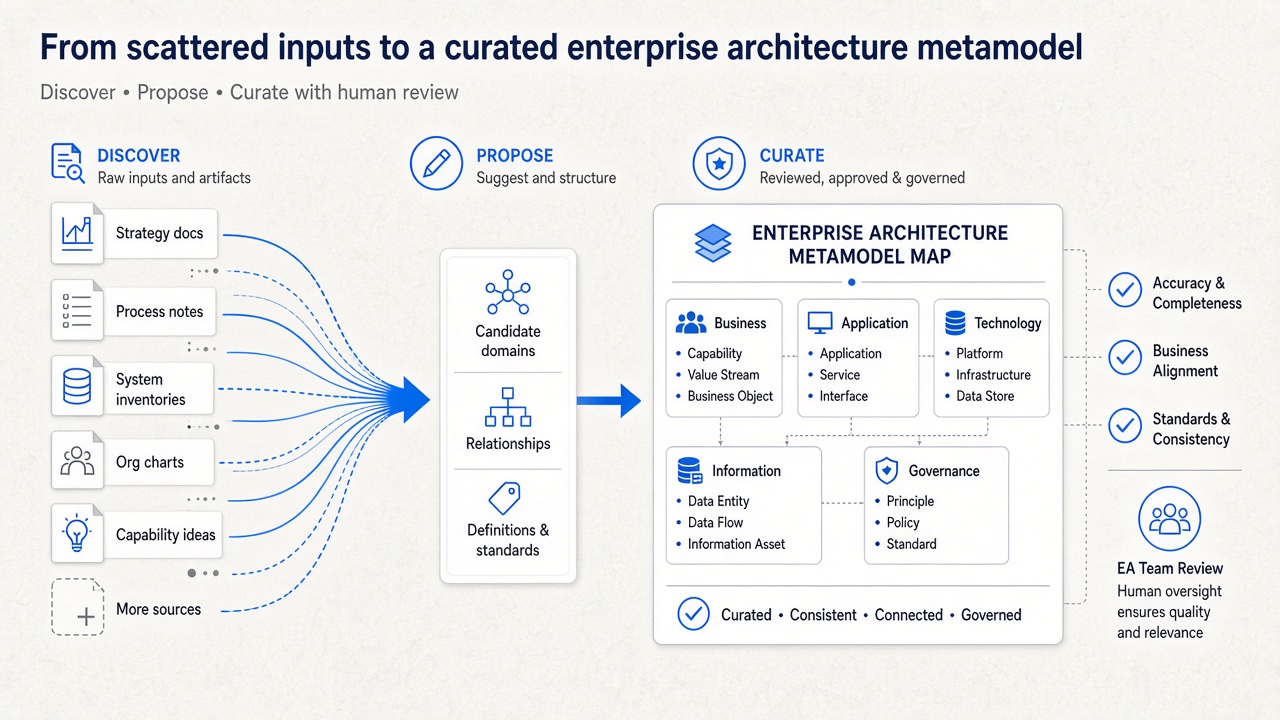
Seed identity from a CMDB or inventory spreadsheet; add meaning from HLDs, wikis, transcripts and natural language. AI proposes metamodel-aware entities and relationships from both, evidence is bound, and architects curate incrementally. Spreadsheet import today — not live bi-directional ServiceNow sync.
Treat AI proposals as drafts with evidence: review in a queue to accept, edit, reject or defer; prioritise relationships and weak evidence; record rejections; measure trust. Curate-Don’t-Create — a trusted slice you would defend, not unsupervised 100% coverage.
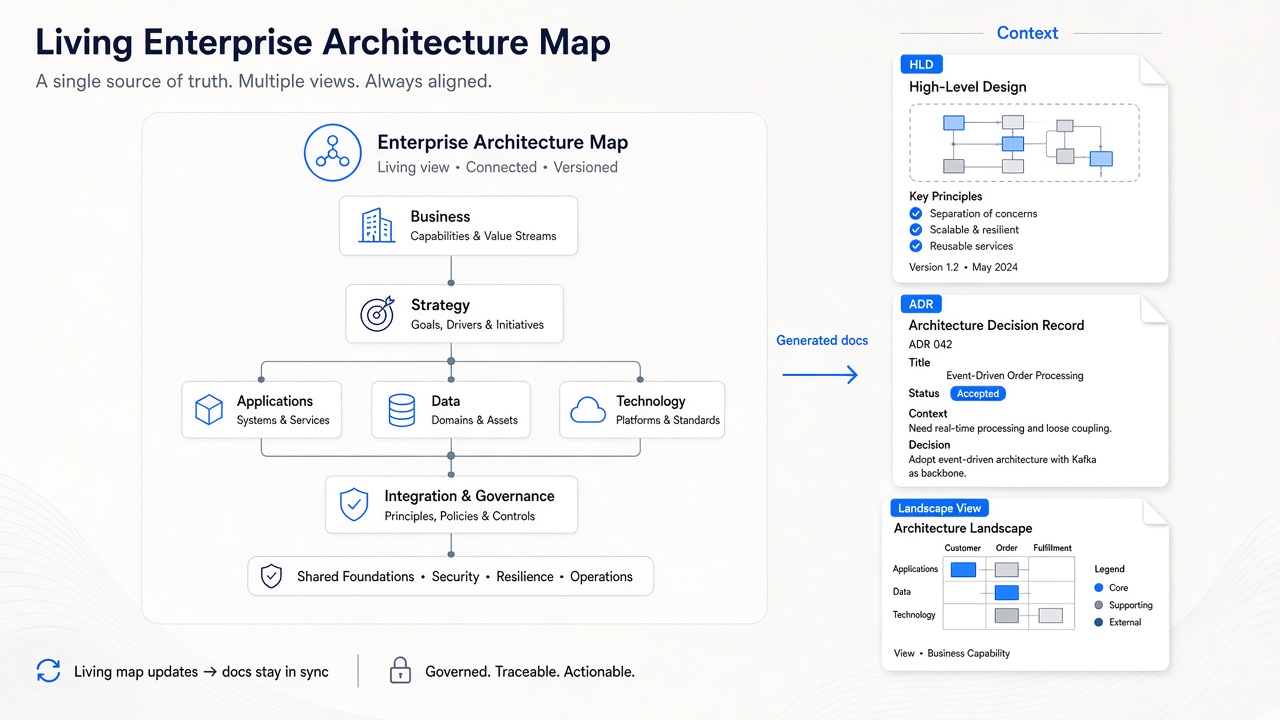
Generate ADR drafts, solution blueprints, and diagram images as outputs of a curated architecture map — not hand-built documents. Extends living-context doc generation and gives solution architects a reason to keep the map healthy. Diagrams are generated, not drawn on a canvas.
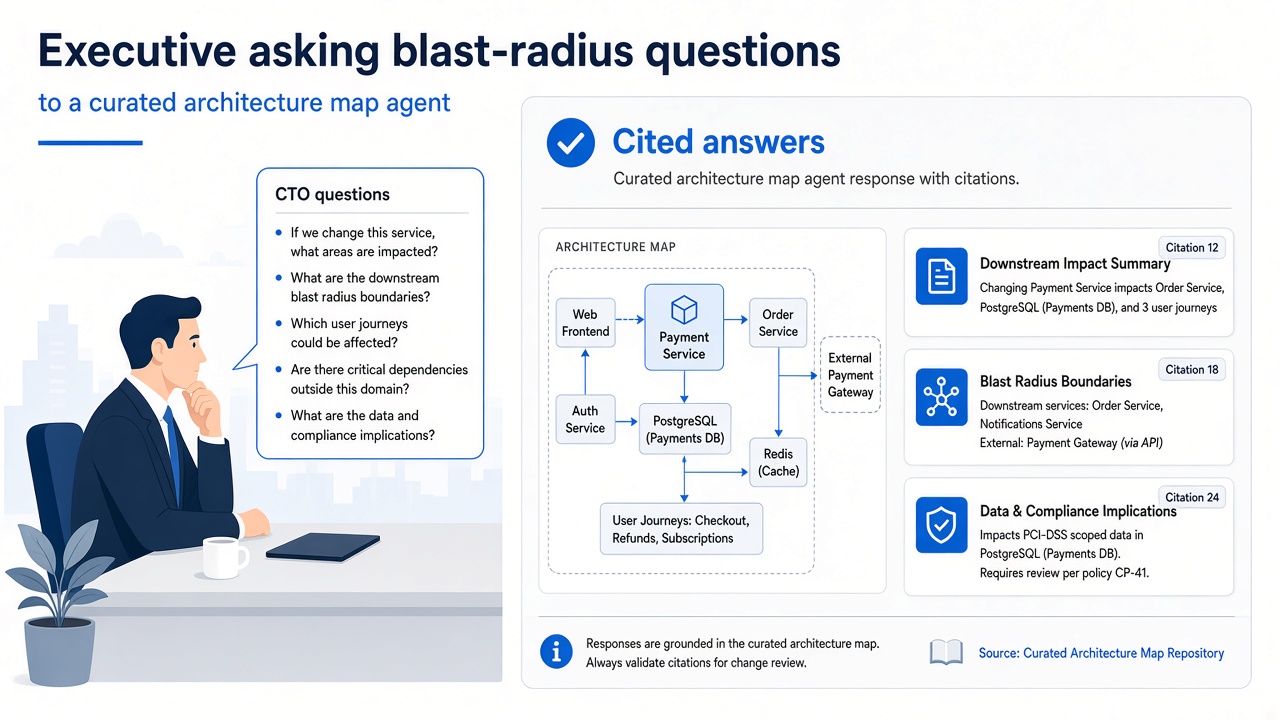
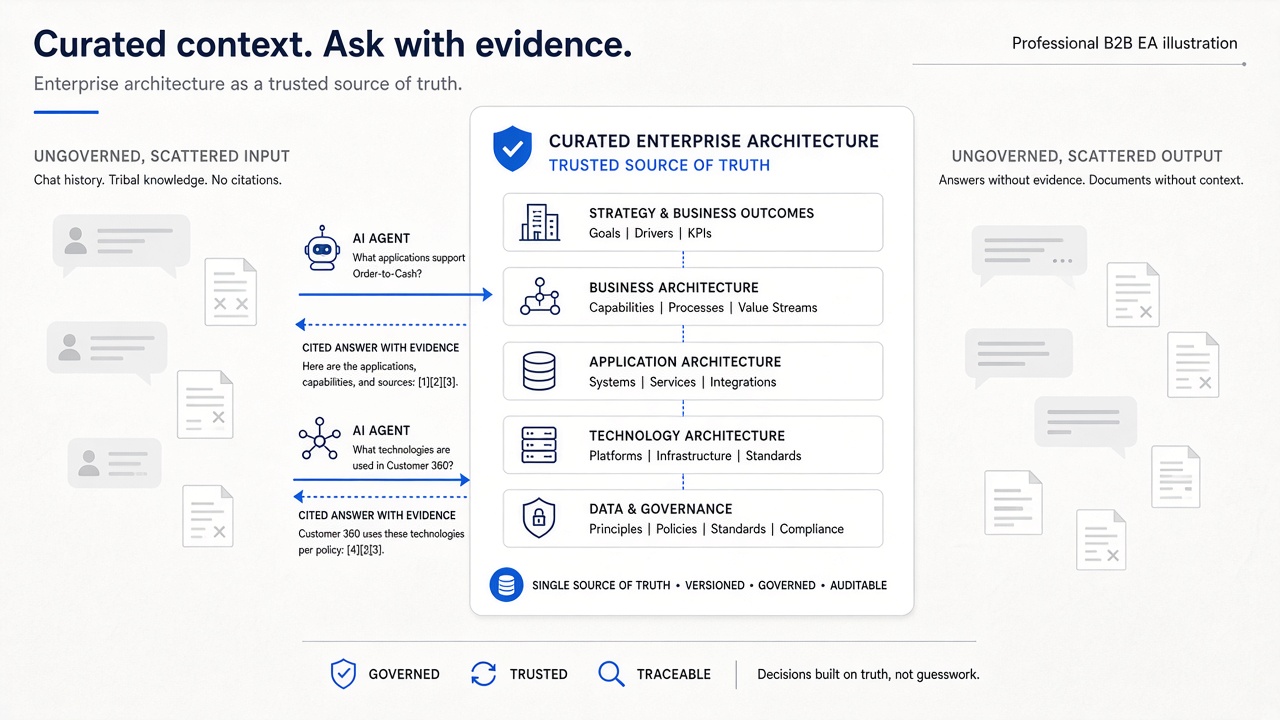
AI agents reason over an enterprise architecture map by traversing curated entities and relationships — blast radius, multi-hop impact, and cited answers — rather than searching text. How Enterprise Ask supports deep reasoning, with honest gaps and human curation.
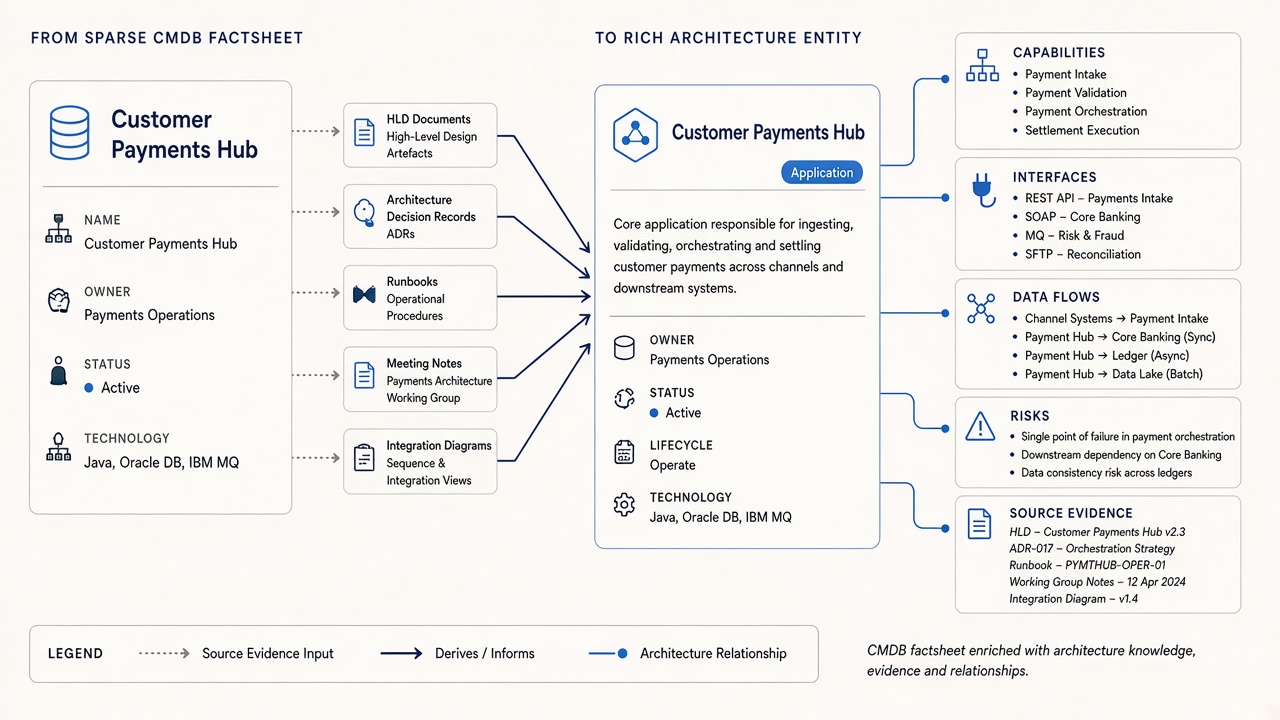
Keep EA factsheets current with AI-drafted per-entity descriptions and relation recommendations that surface graph edges no single document states — with human curation and evolving connections as new evidence arrives.
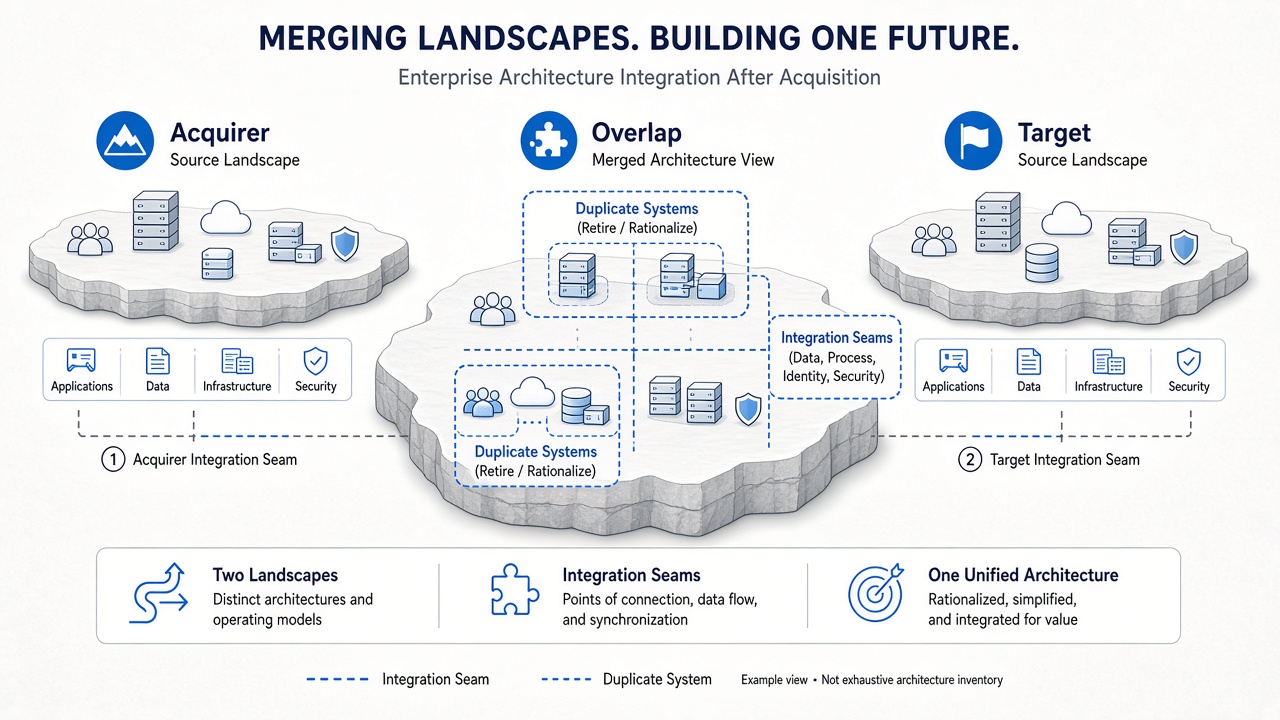
Fast-track M&A IT due diligence by putting data-room documents in and getting a curated, askable landscape map out — overlap, integration seams, and separation risks with cited evidence, in days rather than weeks.
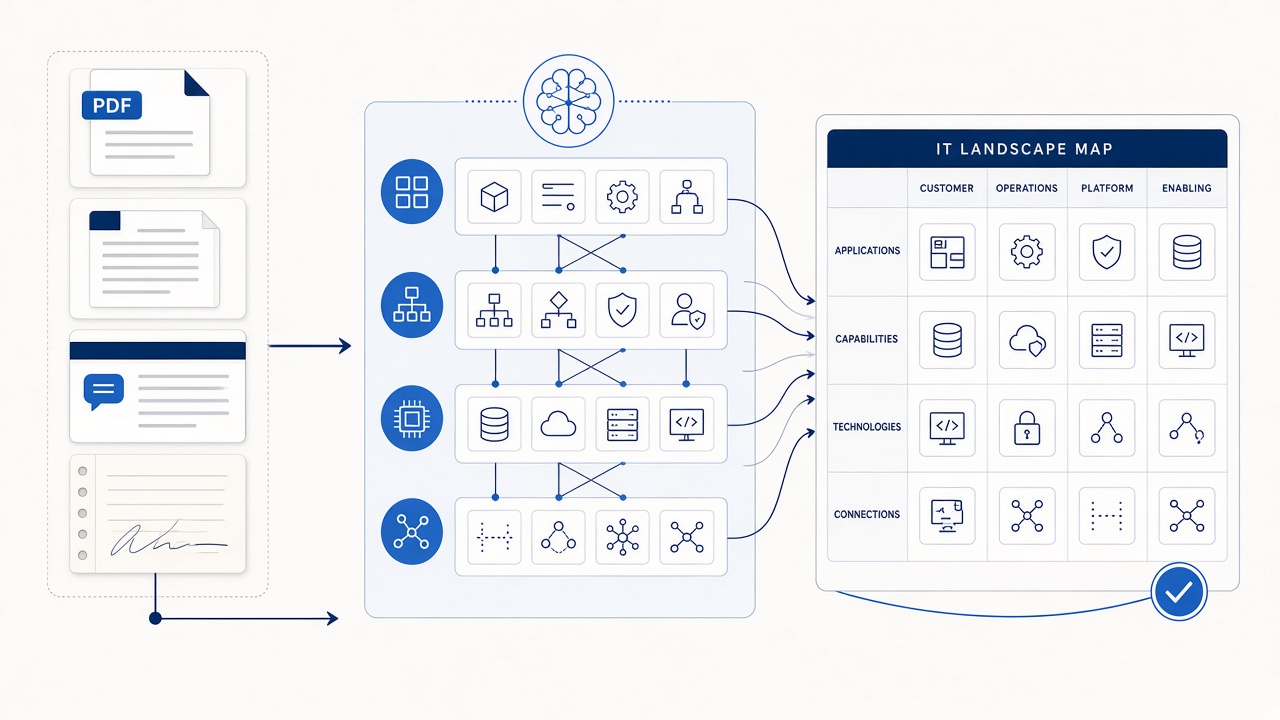
Build application dependency maps from existing documentation by interpreting described data flows as dependency interfaces, automatically modelling interfaces and relations, and curating them — no network scanner required as the starting point.
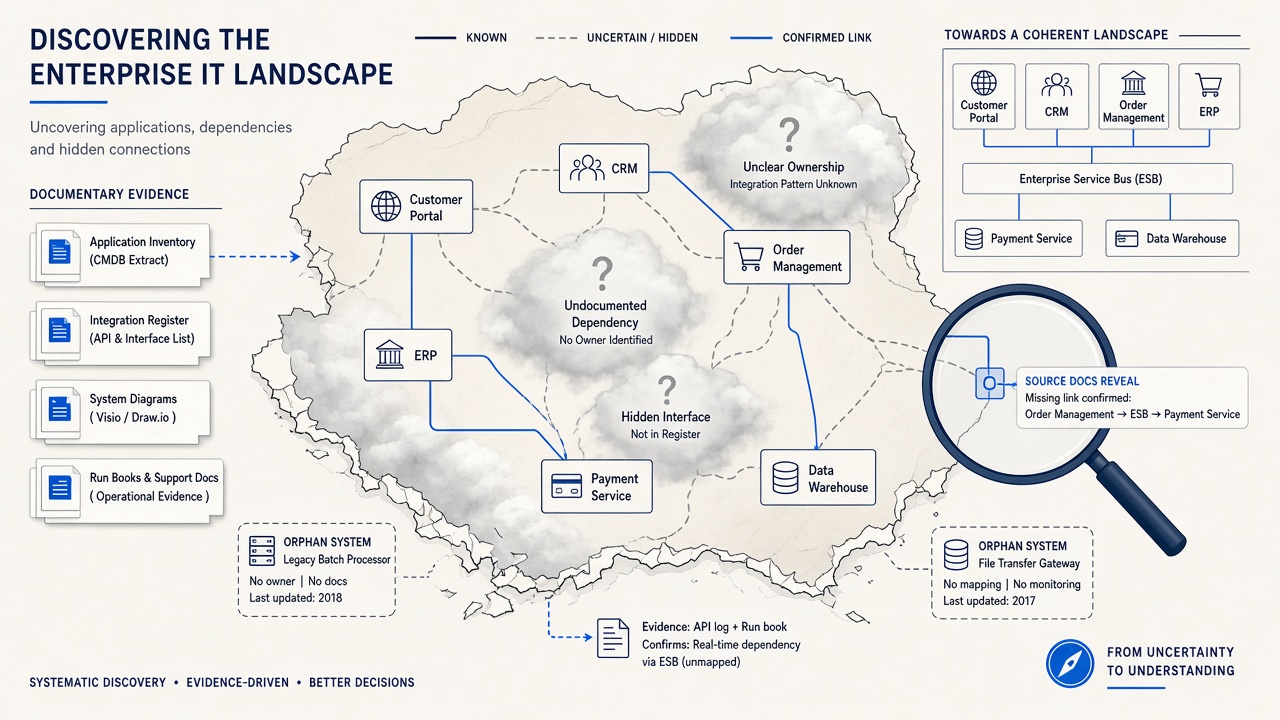
Assess an IT landscape without months of workshops: build a first-draft map from existing documents and spreadsheets, then use short workshops for decisions, contradictions, and gaps instead of blank-factsheet inventory sessions.
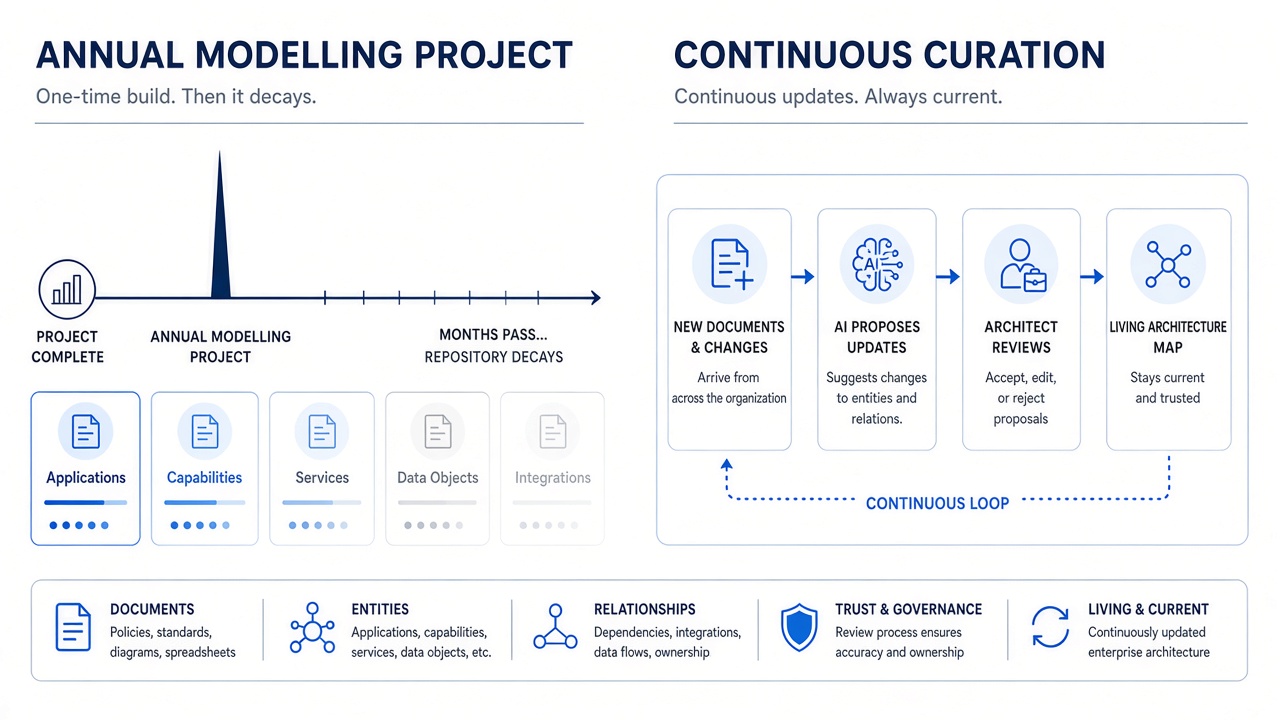
Keep an enterprise architecture repository up to date with continuous AI-proposed refresh and human curation — instead of an annual modelling project that decays. A practical cadence, review queues, and metrics that show the repository is current.
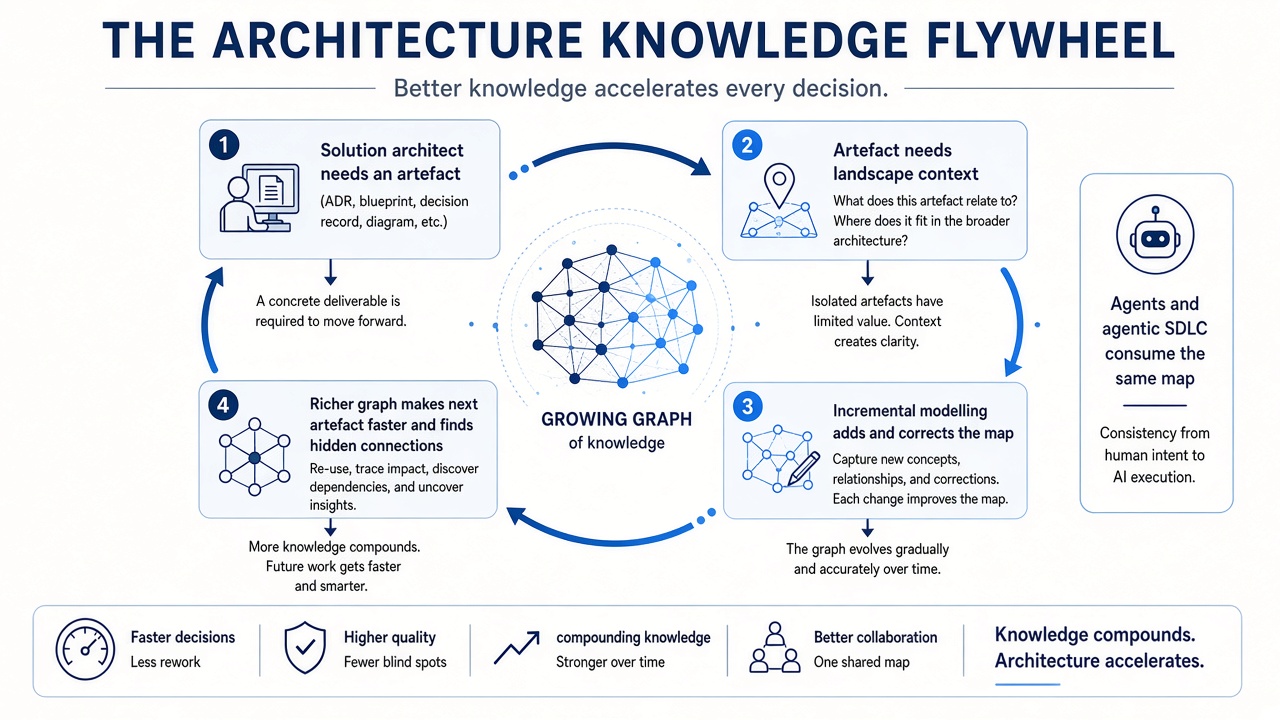
Why architecture knowledge compounds when solution architects need artefacts, every blueprint needs landscape context, and incremental modelling makes the map cheap to improve. The flywheel, the graph connections no document knows, and agentic SDLC support.
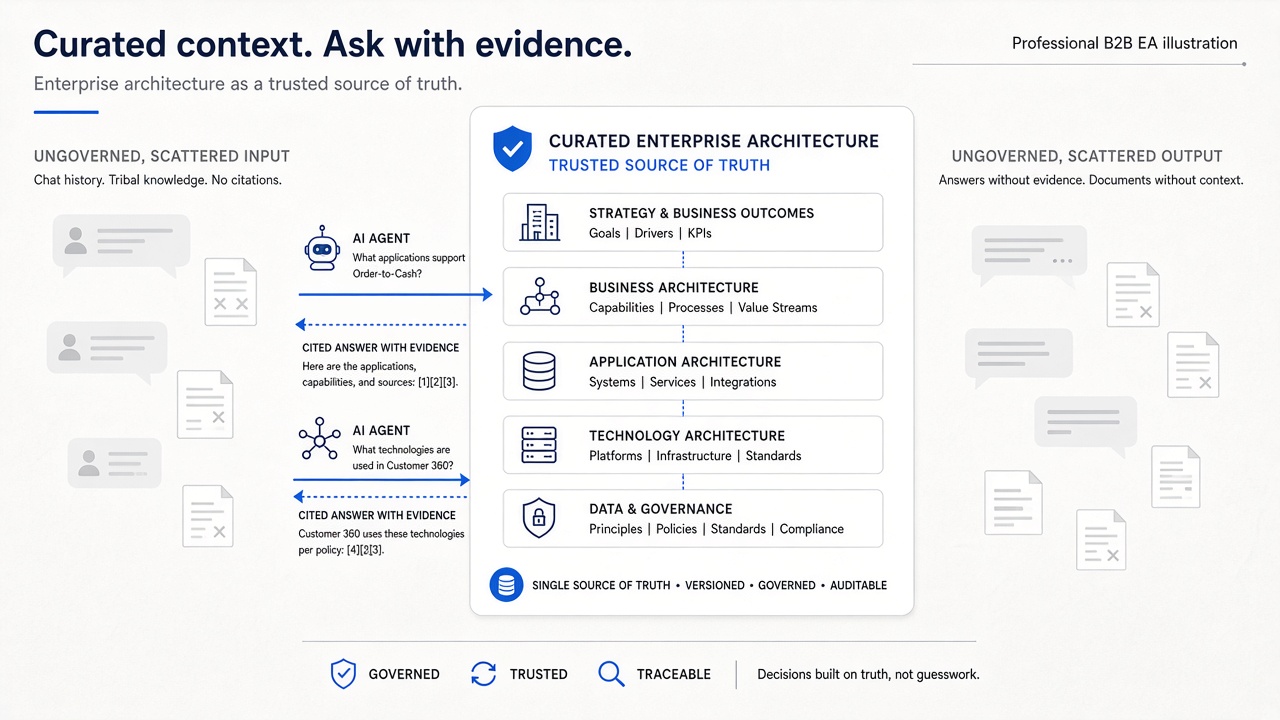
Enterprise architecture context is the curated, metamodel-aware model of the IT estate — entities, relationships, and How/Why evidence — that humans and agents share. Document RAG retrieves passages; it does not own that shared landscape.
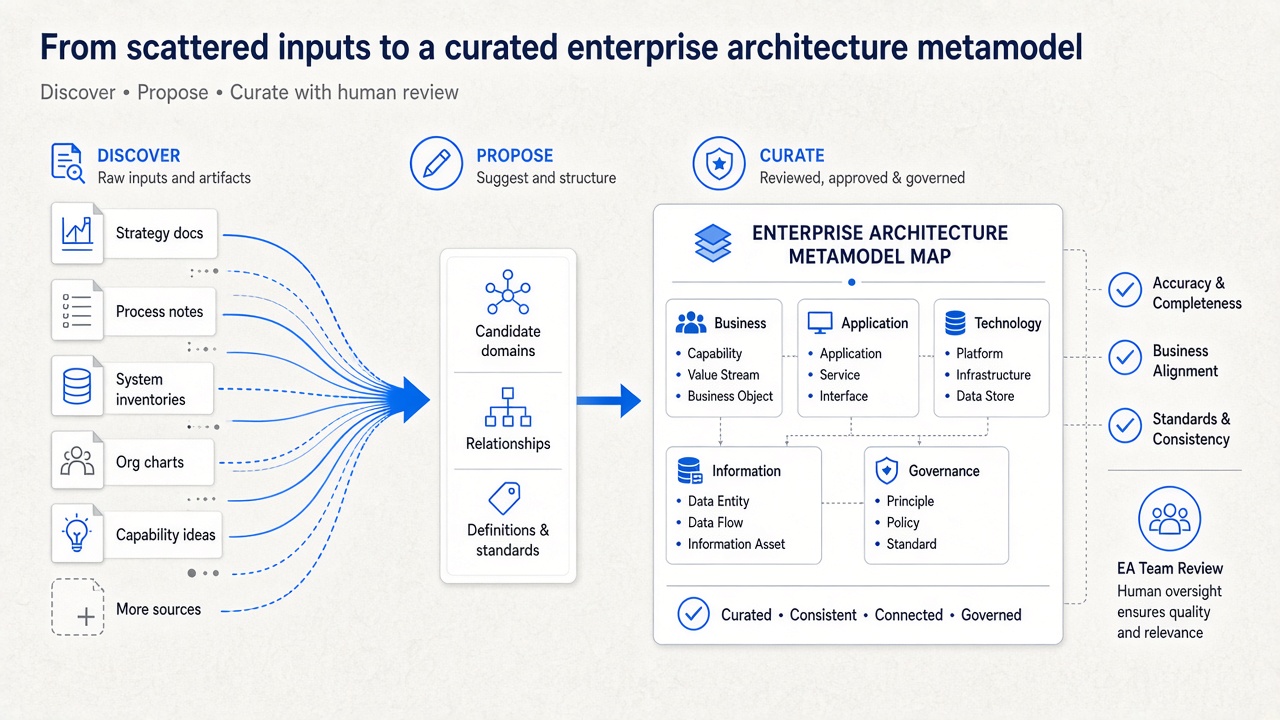
AI accelerates automated enterprise discovery by proposing metamodel-aware entities and relationships from documents and inventories — then humans curate. The gain is cycle time and coverage, not unsupervised truth. That is how Discovery Tax falls without emptying governance.
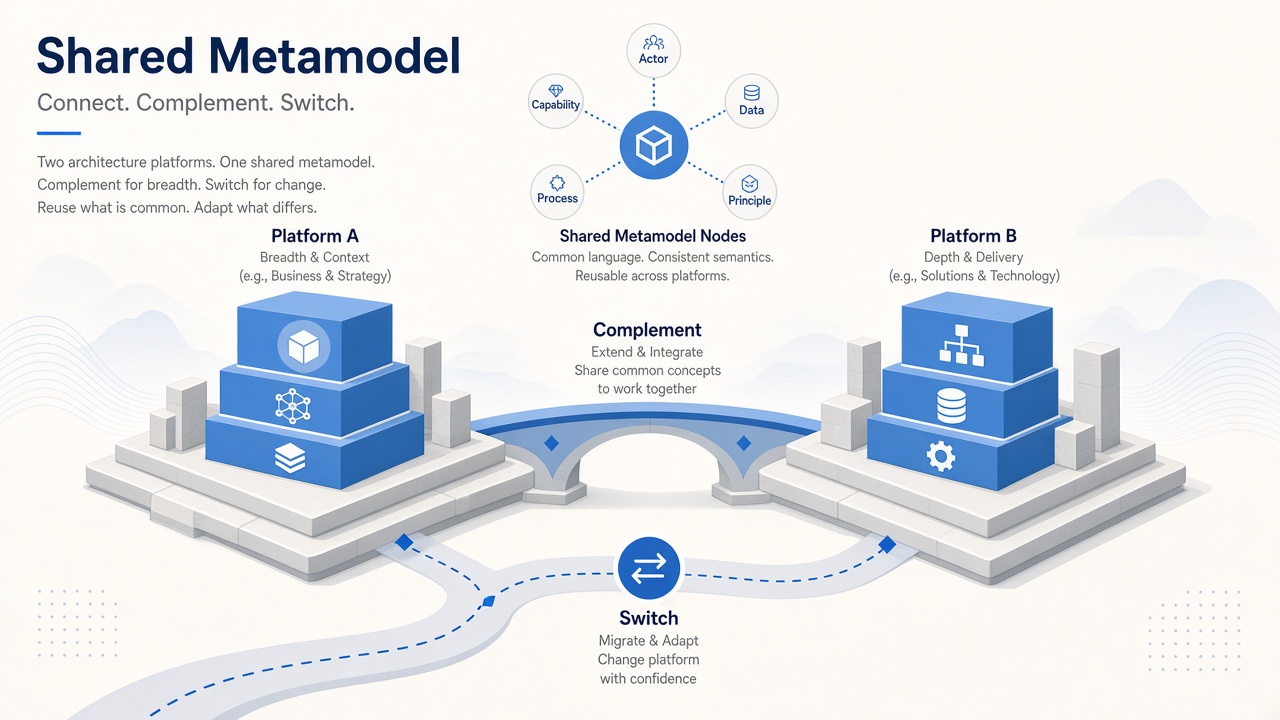
A LeanIX-compliant enterprise baseline means Applications, IT Components, Capabilities and related factsheet types aligned to that metamodel — populated from CMDB extracts and documents with AI proposals and human curation, not months of blank factsheet entry.
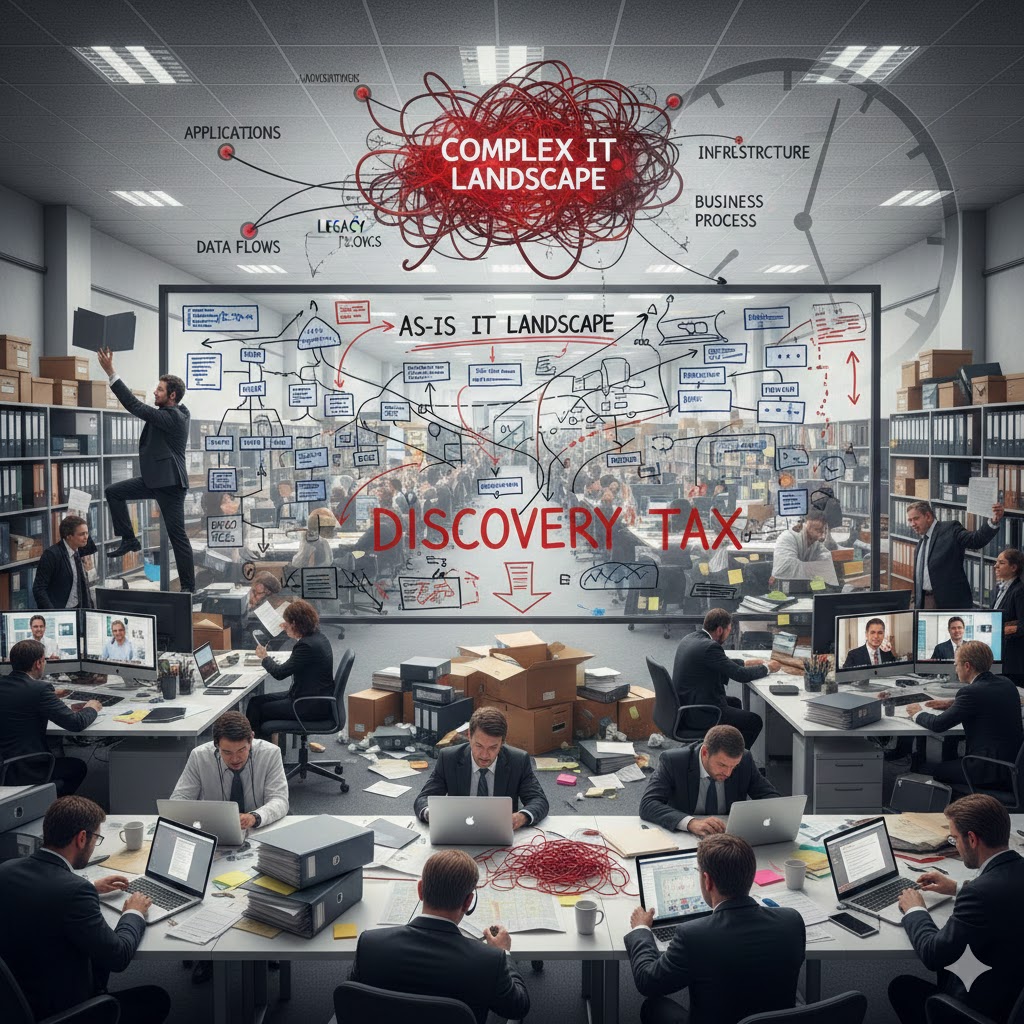
The Context Tax is the recurring cost of every team and agent re-assembling IT landscape truth from wikis, tickets, and tribal memory — instead of inheriting a curated architecture Context of Record. It is the twin of the Discovery Tax in the agentic era.
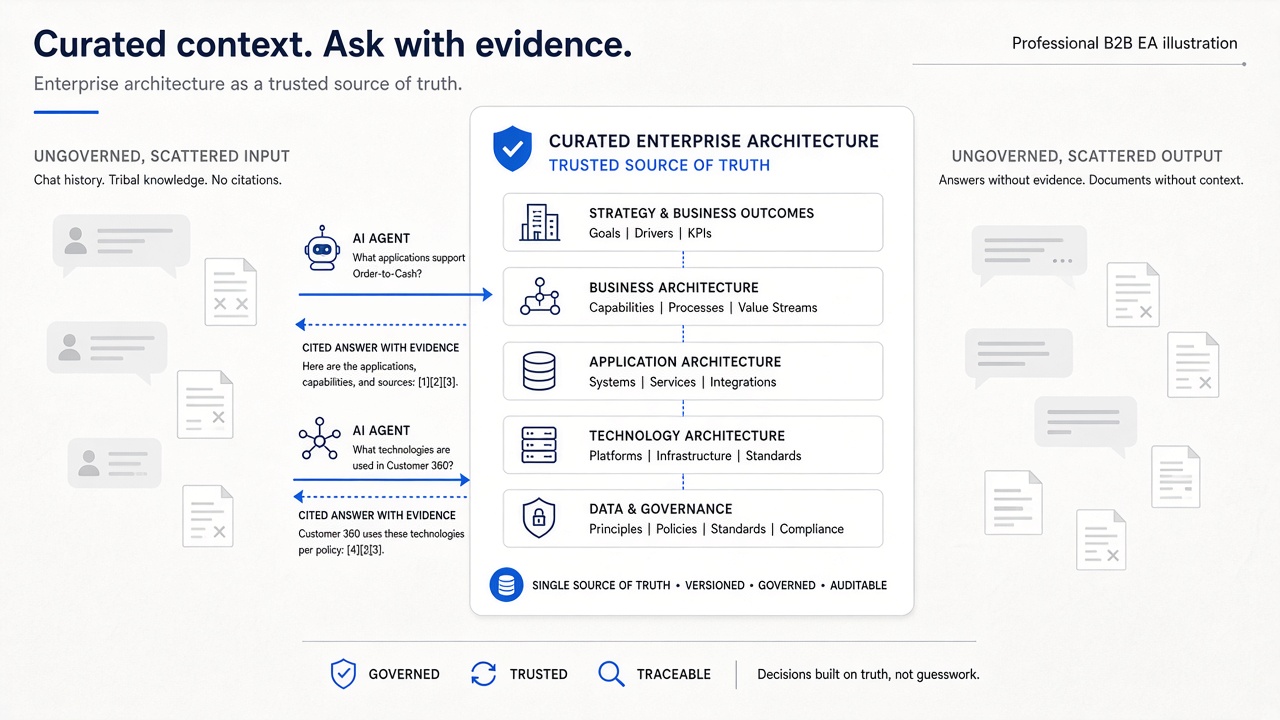
Shaping enterprise context for IT knowledge management means building a curated metamodel map with How/Why evidence, ownership, and an askable interface — not stocking another wiki. Structure, bind, curate, and refresh so knowledge compounds.
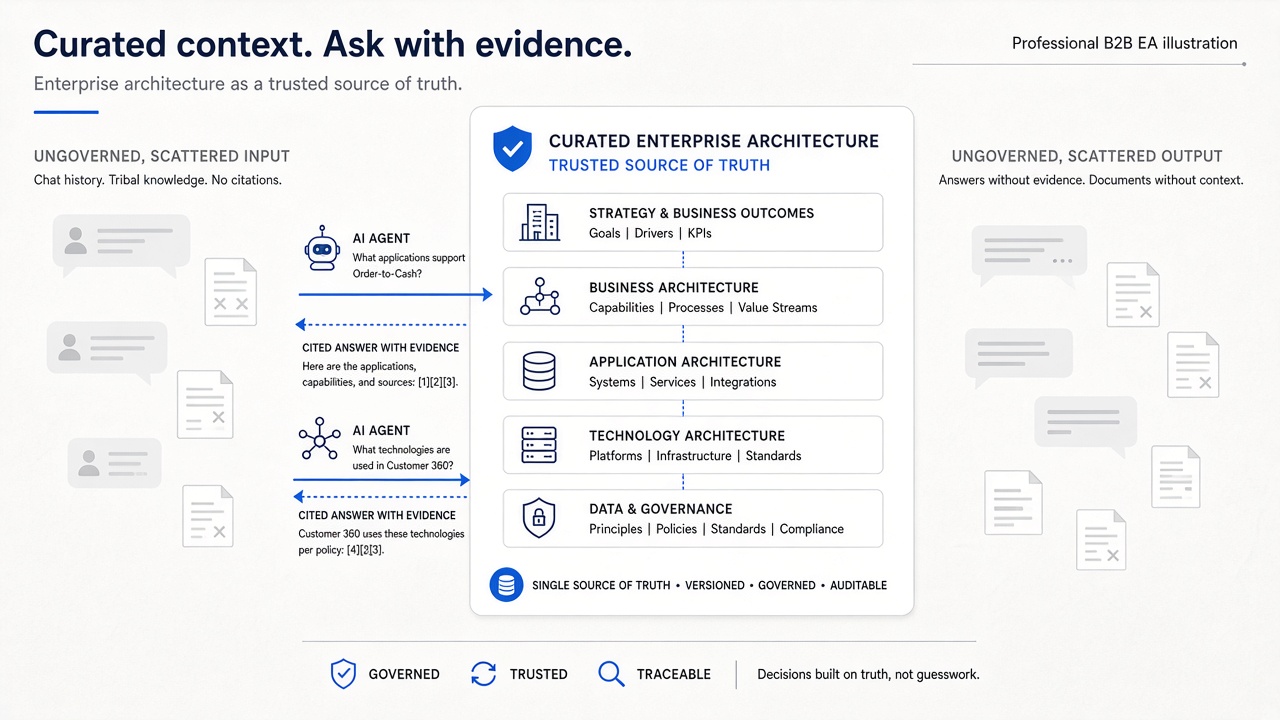
Document knowledge bases store narrative for retrieval. Architecture knowledge management stores curated commitments about the IT estate — metamodel entities, relationships, and How/Why evidence — so humans and agents share one Context of Record.
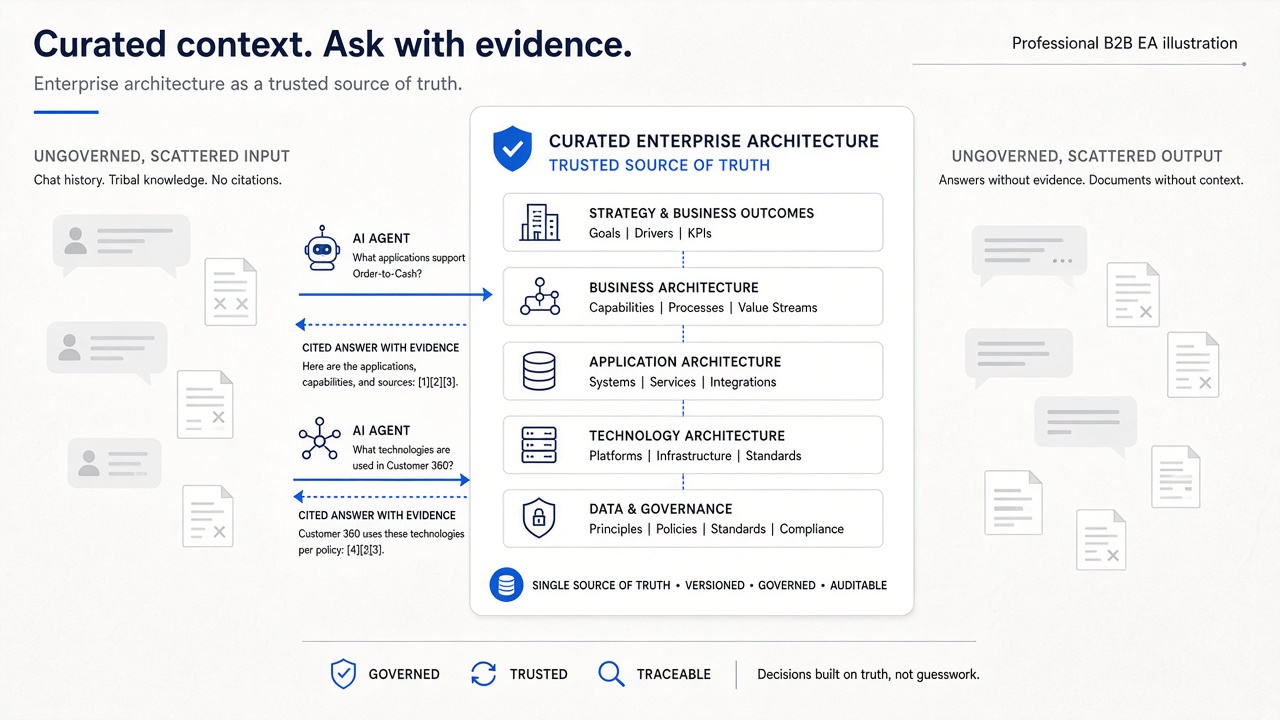
In an agentic SDLC, coding and infra agents need a shared architecture context plane — a curated metamodel map with evidence — not a private wiki crawl per run. DecisionPen holds that context; build and deploy agents consume context packs and write accepted design back.
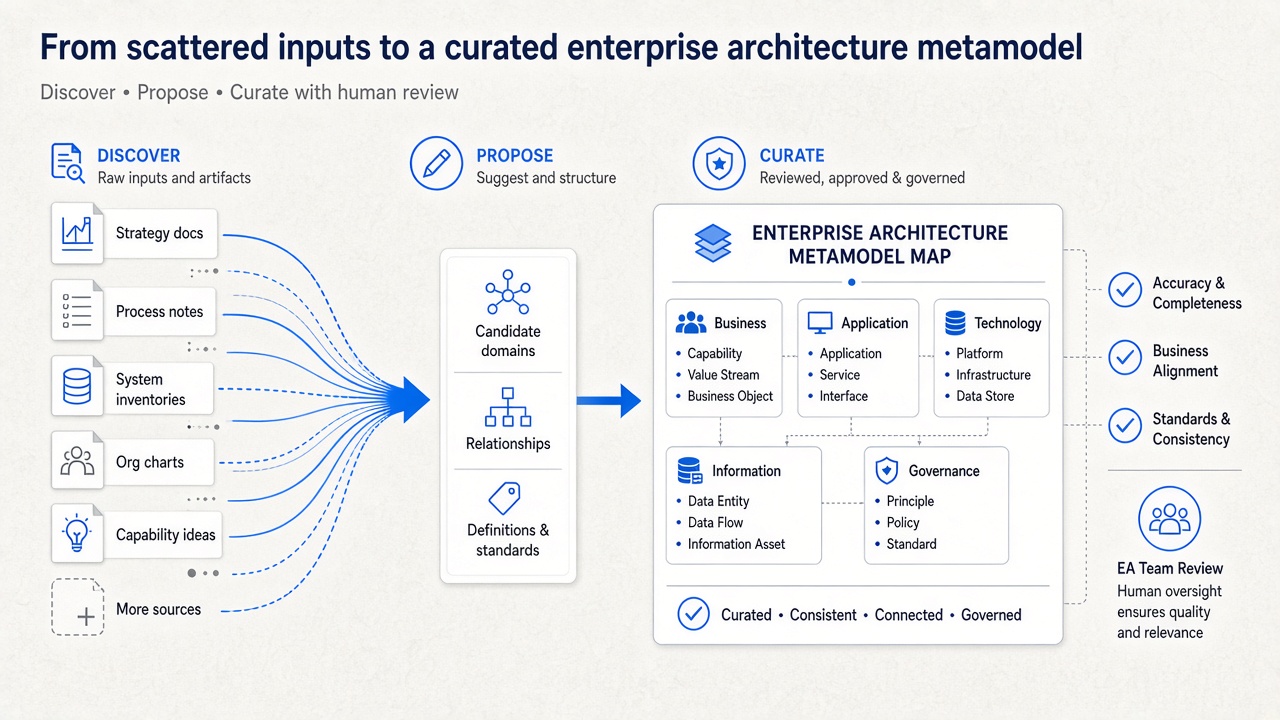
Evidence-Linked Discovery is a working method: AI proposes metamodel-aware landscape updates from documents and inventory; humans curate; the organisation asks and generates from a Context of Record; delivery agents consume context packs. Discovery becomes durable architecture context — not a one-off baseline PDF.
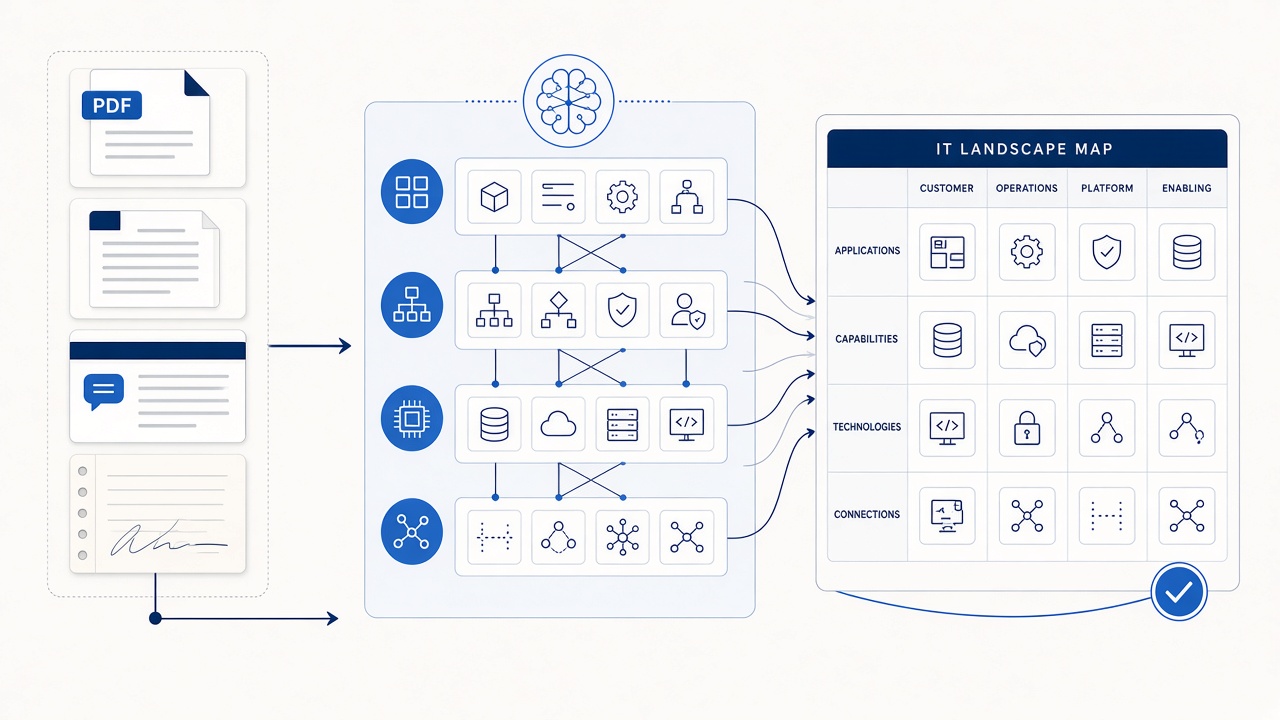
Automated IT landscape modelling uses AI to propose applications, capabilities, technologies and relationships from documents, transcripts and other unstructured evidence, then lets architects curate them into a living, queryable enterprise model.
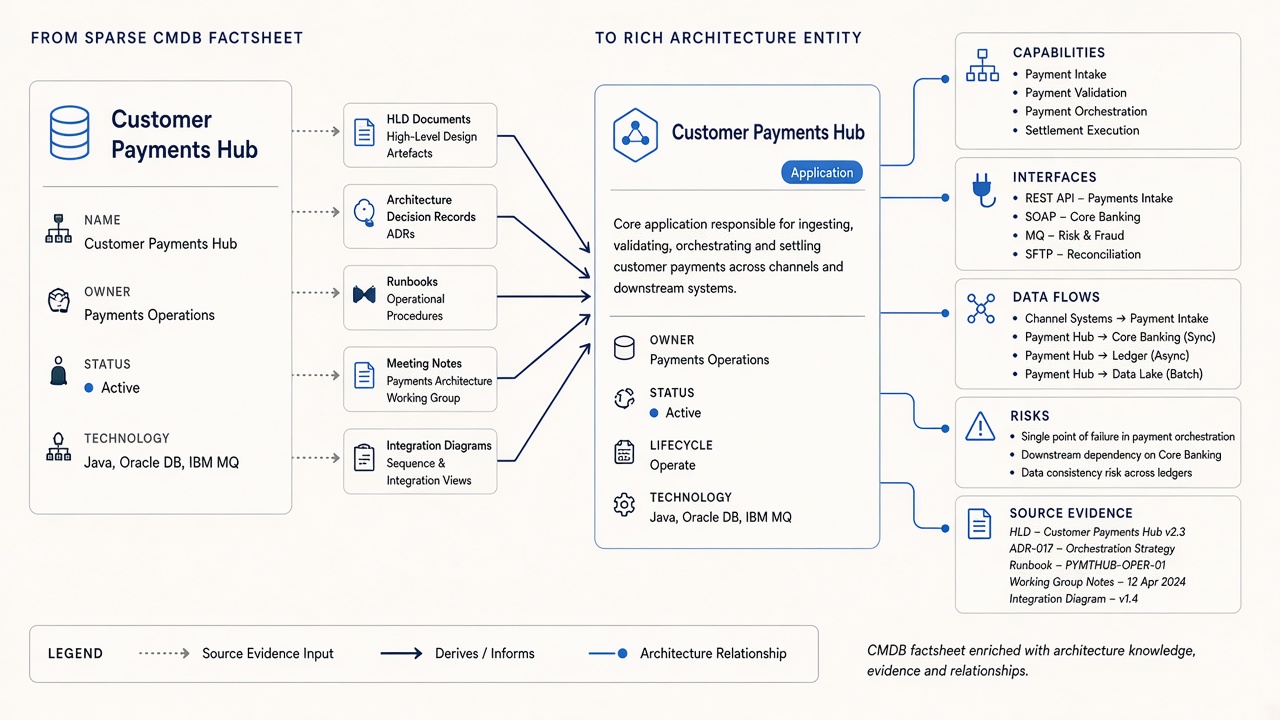
Start with the structured skeleton you already trust — a CMDB or inventory extract — then enrich each EA factsheet with purpose, integrations, rationale, constraints and evidence from HLDs, ADRs, runbooks, transcripts and experts.
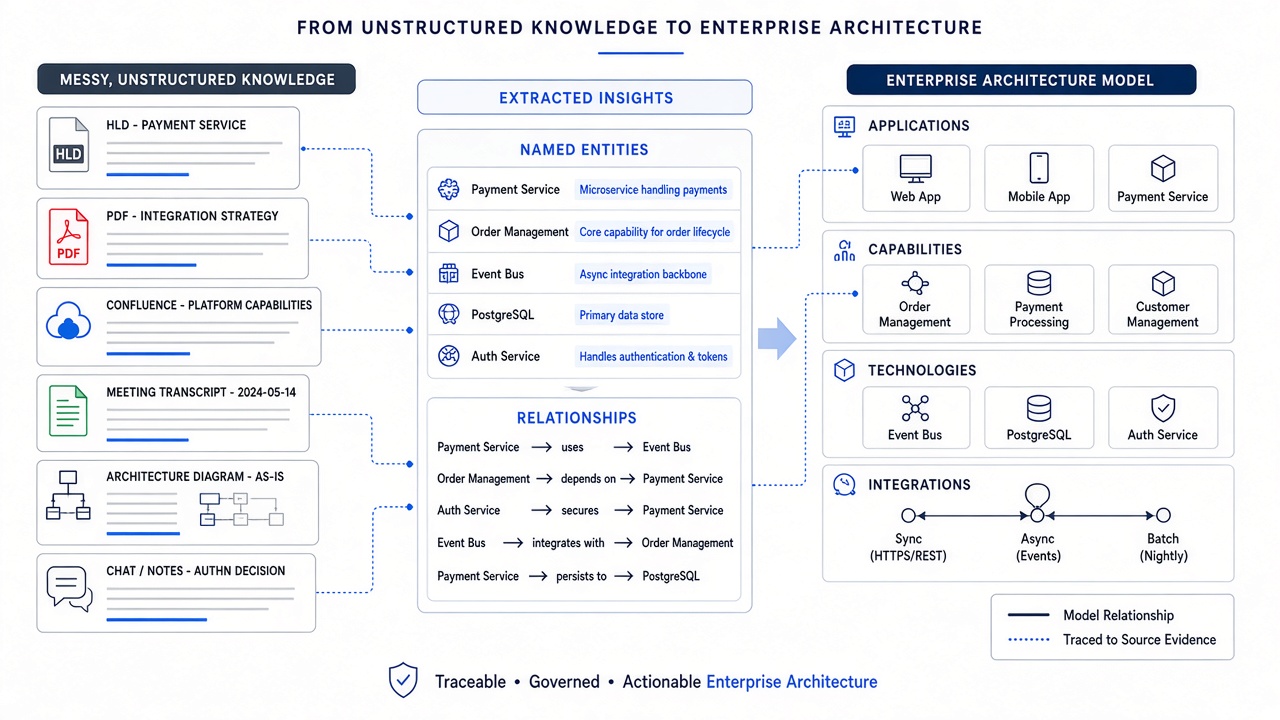
The mechanics behind document-first EA: collect sources, extract candidate entities, resolve aliases and duplicates, map findings to a metamodel, bind evidence and confidence, and curate the result into a living model.
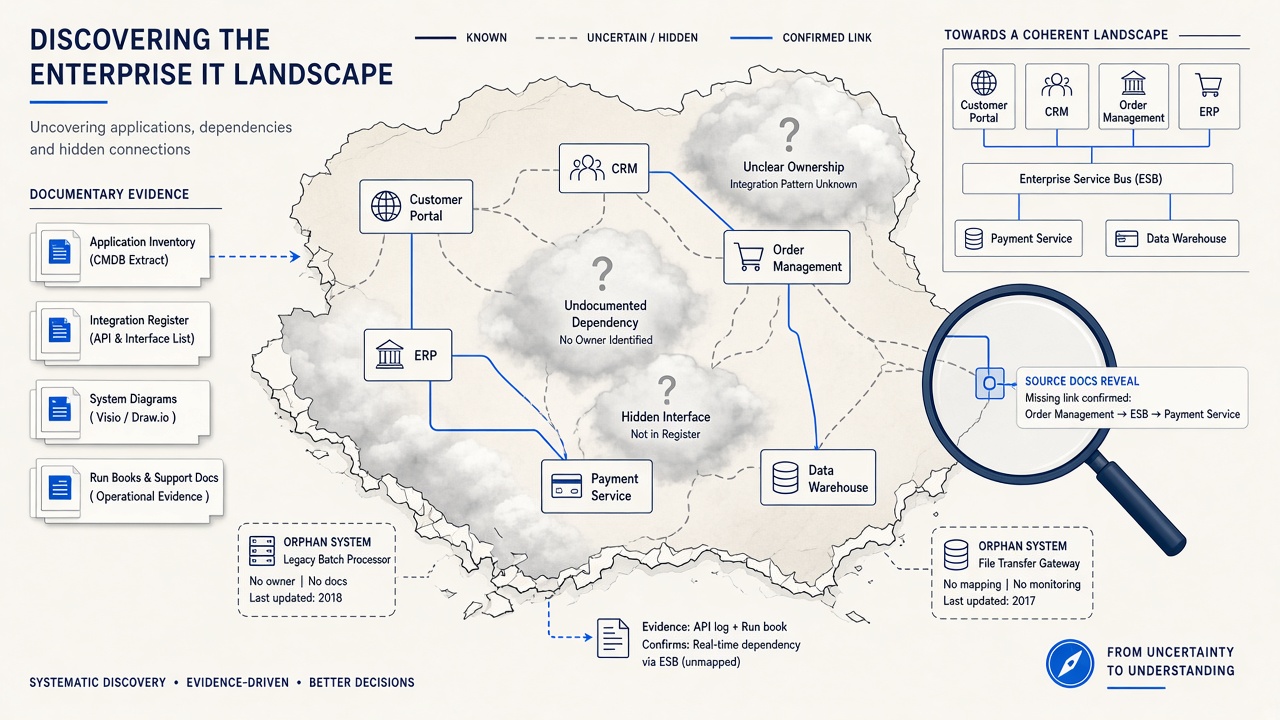
A practical six-step discovery method: bound the scope, combine CMDB and document evidence, match sources to entities, validate conflicts and unknowns, curate a trusted landscape slice, and keep it living.
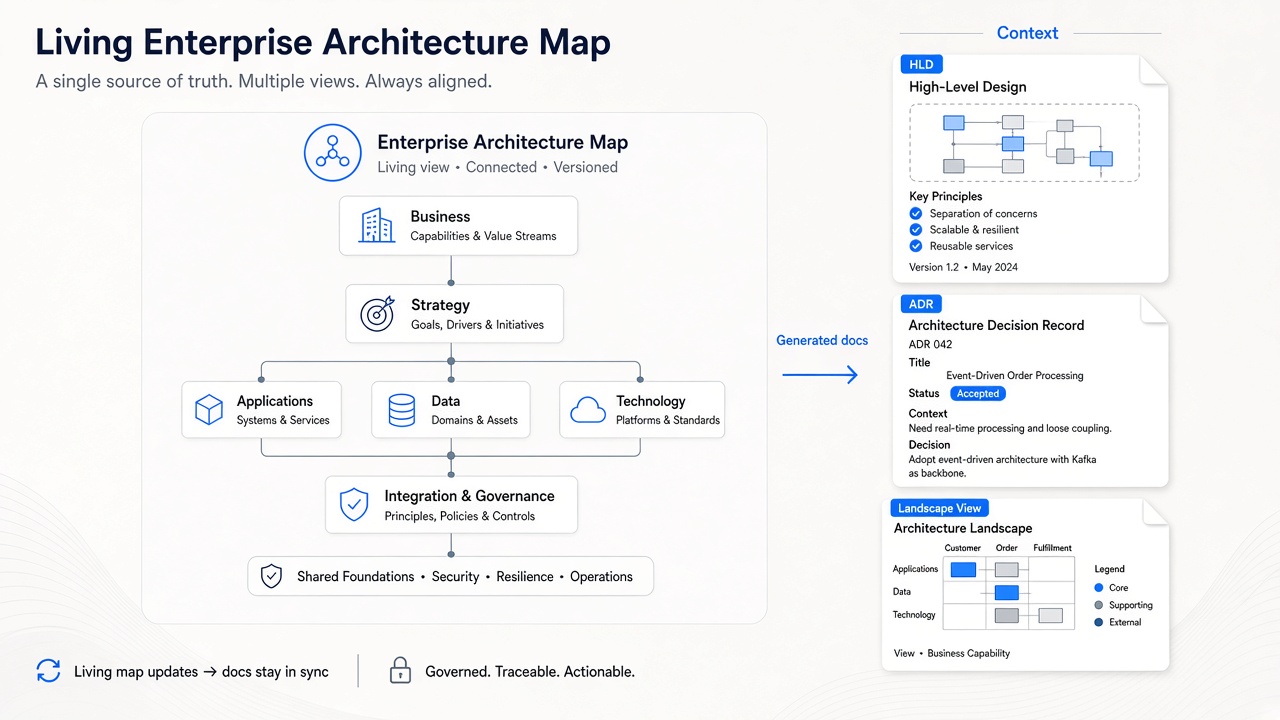
HLDs and ADRs should be views of a curated enterprise map — not parallel private truths. Here is how generating architecture documents from living context cuts rediscovery and keeps institutional memory compounding.
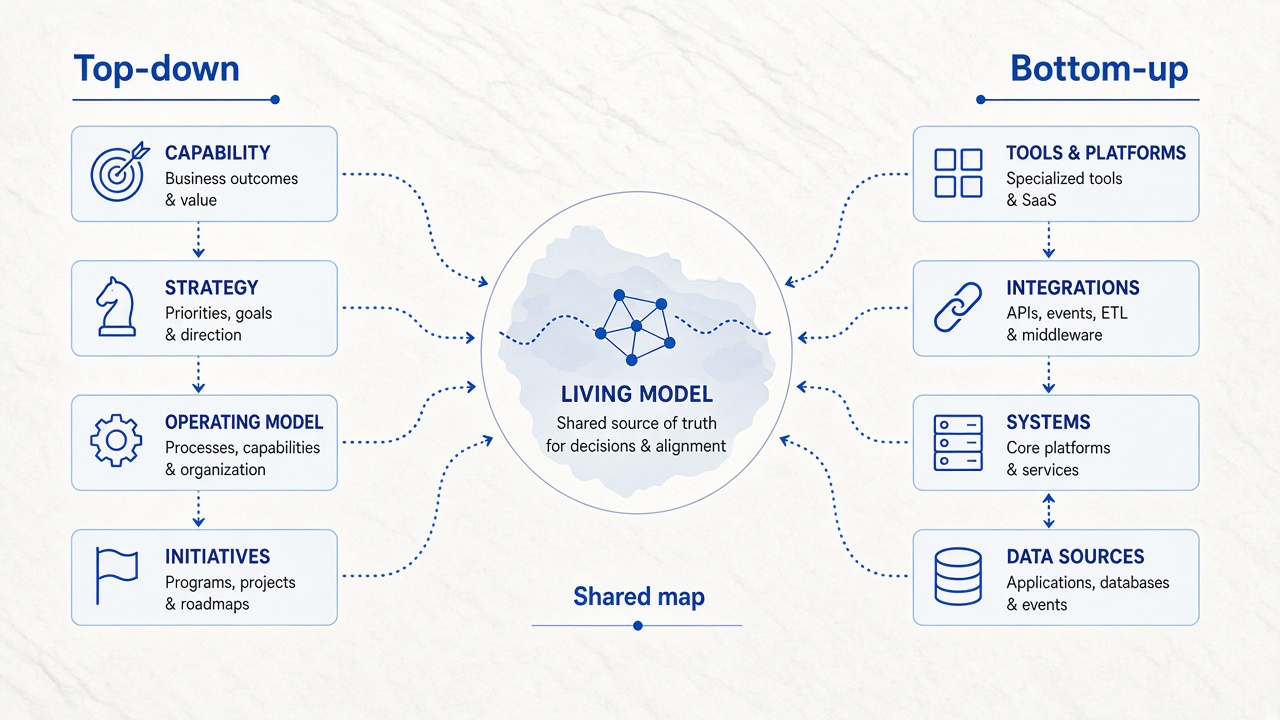
Pure top-down EA stalls on empty repositories. Pure bottom-up floods you with noise. The practical answer is hybrid modelling: strategy and capabilities guide the frame; meetings, docs, and systems feed living facts — with human curation.
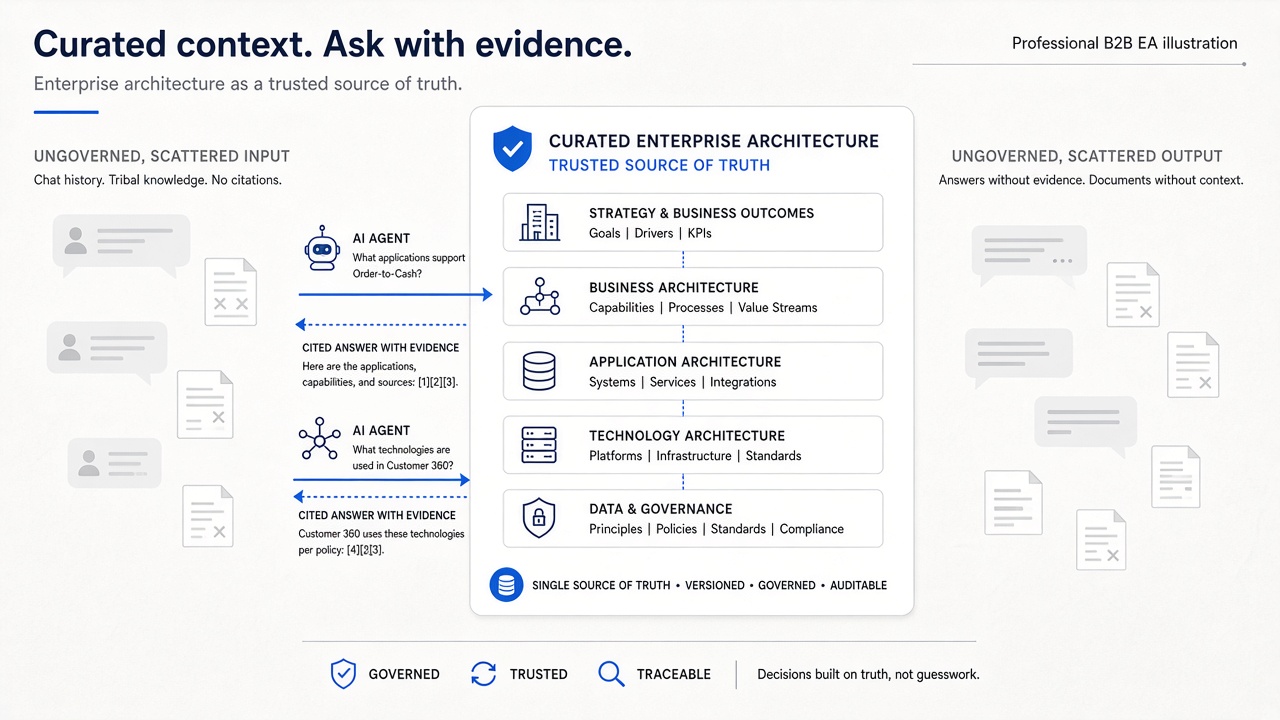
When every team can ask ChatGPT or Copilot, ungoverned answers multiply. Enterprise architecture must own curated, metamodel-aware context so agents and humans decide from the same living map — with evidence, not vibes.
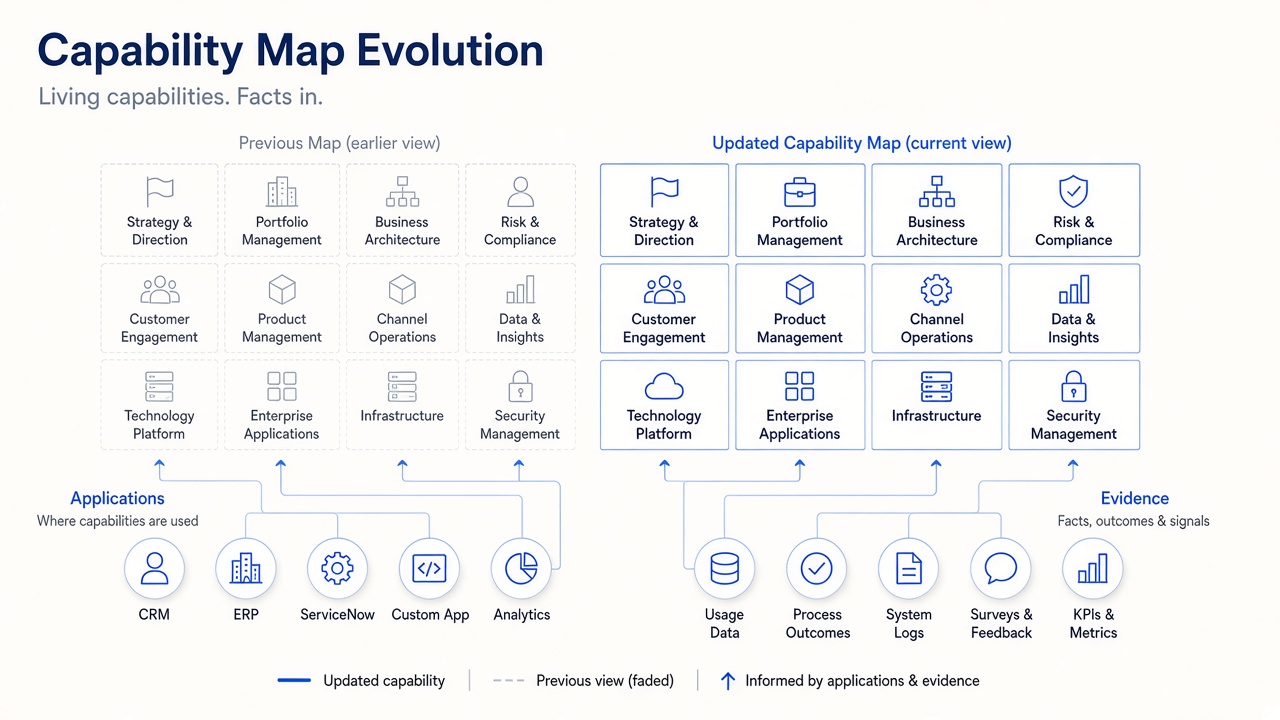
Annual capability posters go stale the month they are published. Capability maps stay useful when they evolve from living application, process, and evidence facts — not from a one-off workshop.
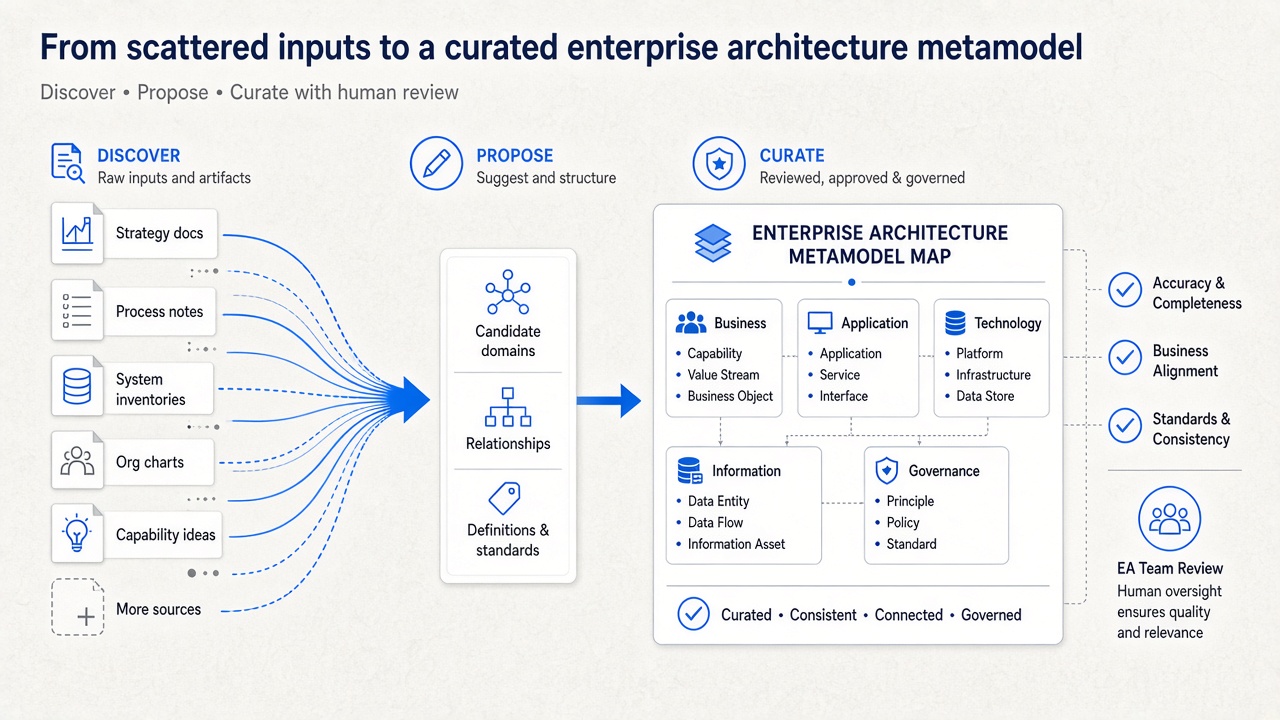
Automated EA discovery is not a CMDB dump or plain document RAG. It means proposing metamodel-aware landscape updates from documents, meetings, and signals — then curating them into a living map you can ask and act on.
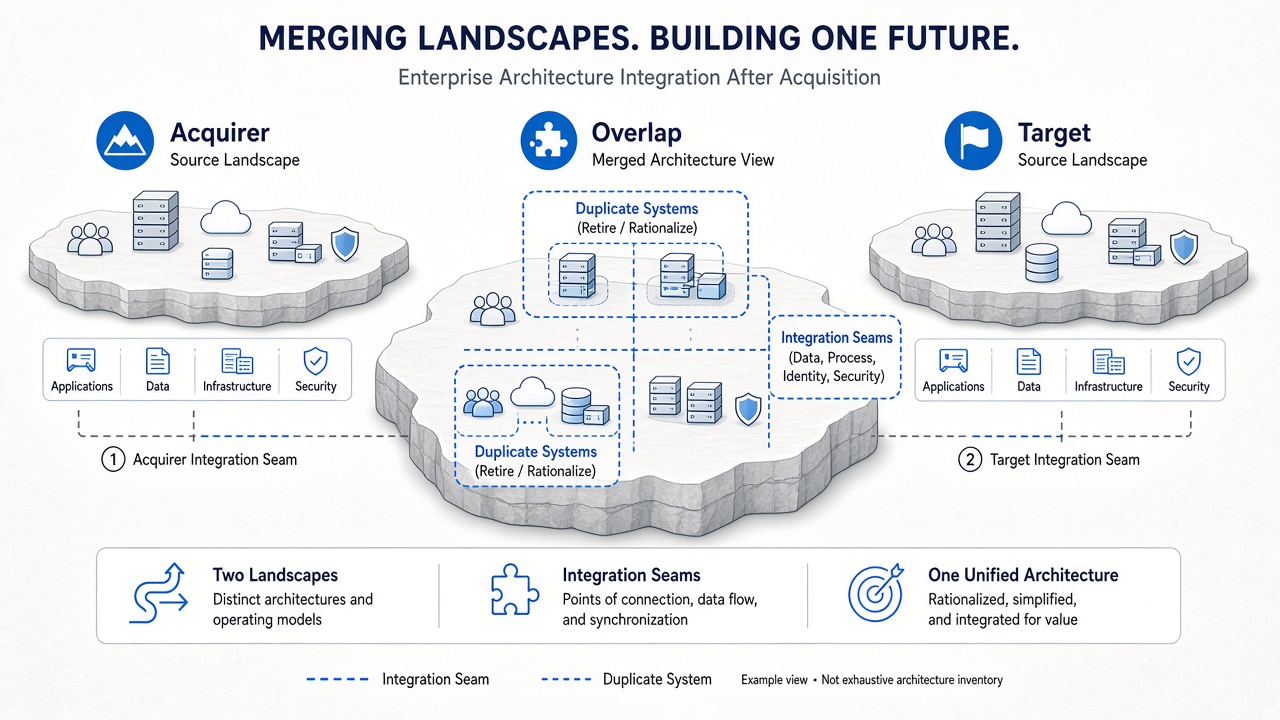
M&A diligence and integration fail when each side’s landscape lives in heads and PDFs. EA tools help when they build a shared, curated overlap map fast — with How/Why context — not after a year of factsheet entry.
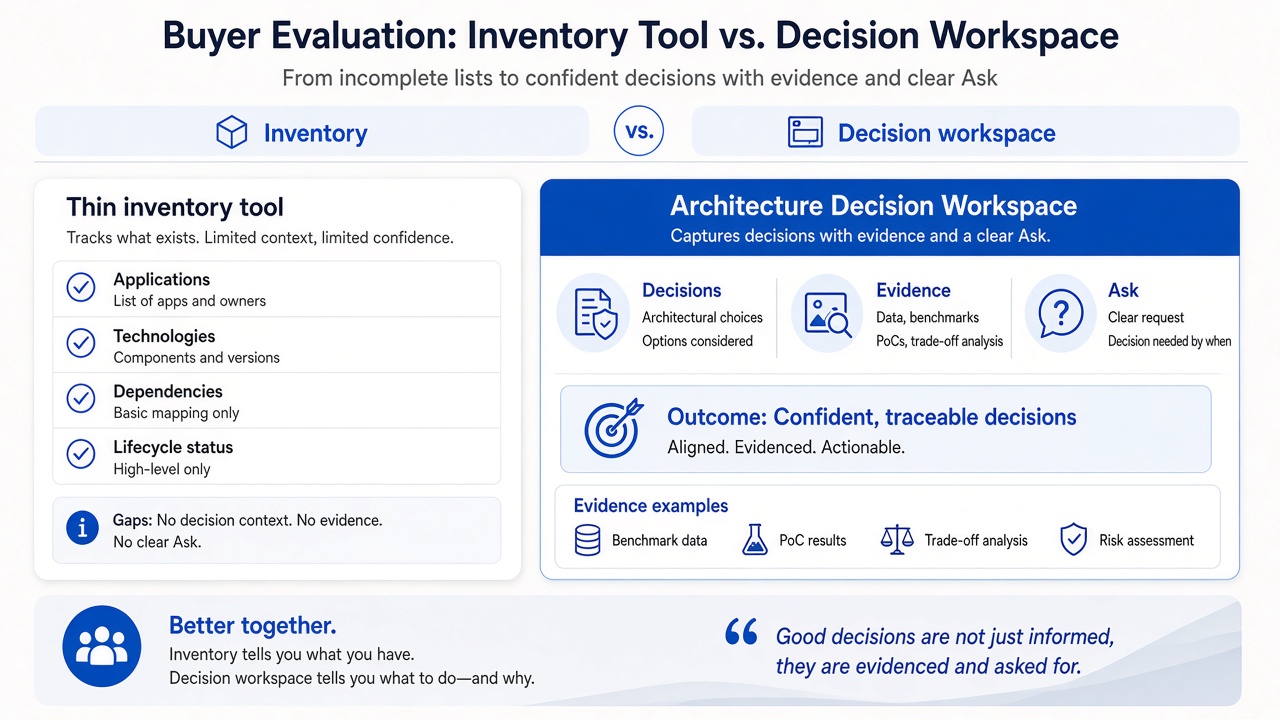
In 2026, picking an EA tool is not only “does it have a metamodel?” Ask whether it keeps How and Why, cuts the modelling tax, supports Ask with evidence, and generates docs from living context — or whether you only get another empty inventory.
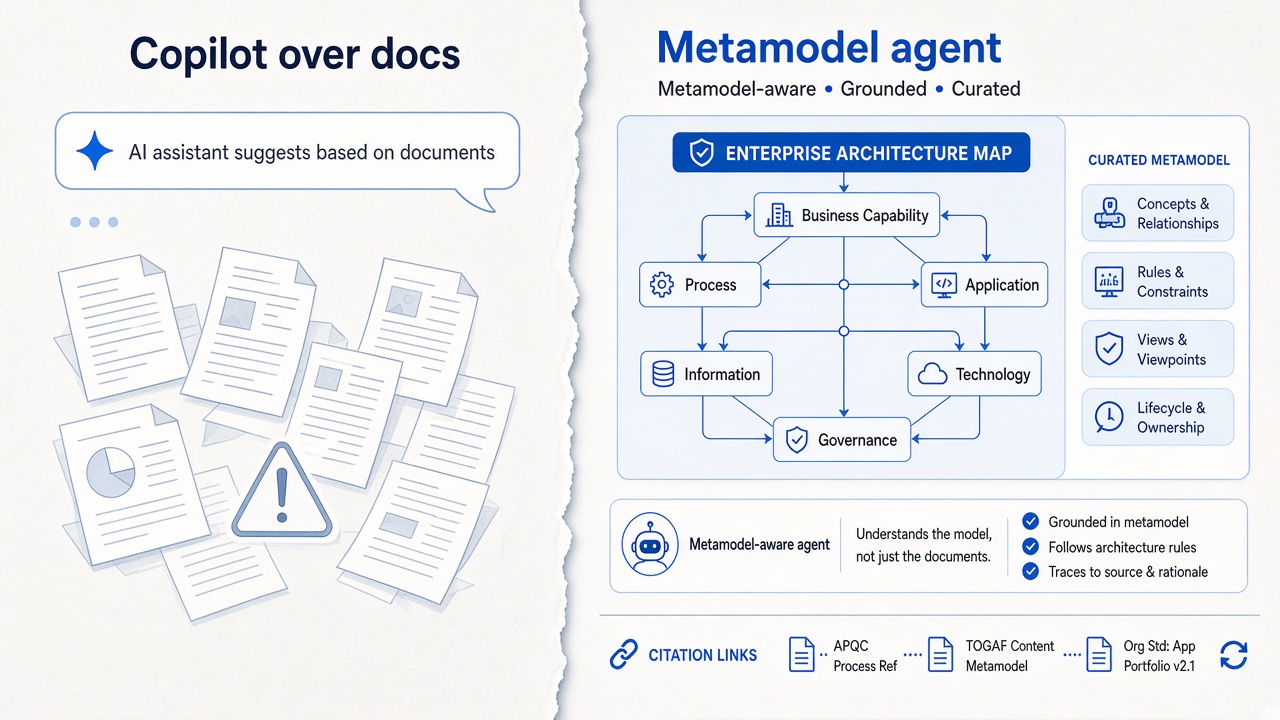
A Copilot over Confluence chats documents. A metamodel-aware agent proposes and answers against a curated enterprise landscape with evidence. Here is why that difference decides whether AI helps EA — or invents architecture.
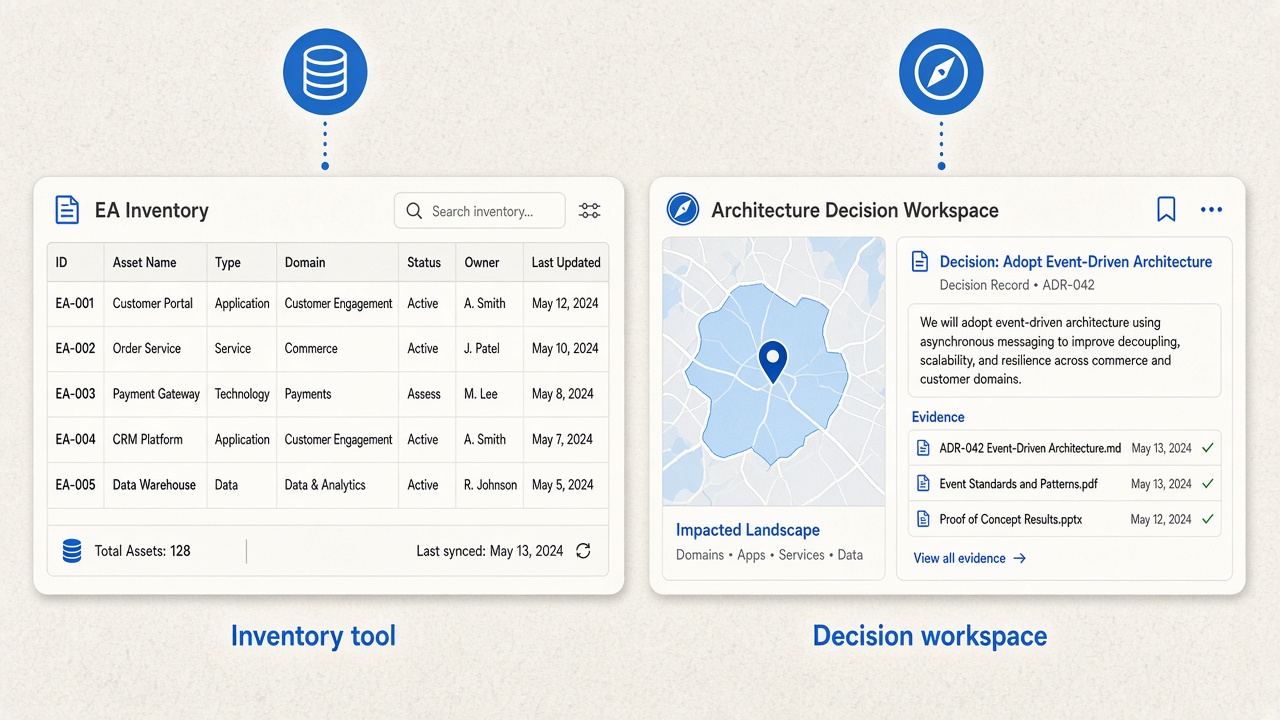
An EA tool often means strategic inventory. An Architecture Decision Workspace keeps metamodel structure plus How/Why evidence, incremental modelling, and map-grounded Ask — built for decisions, not only portfolios.
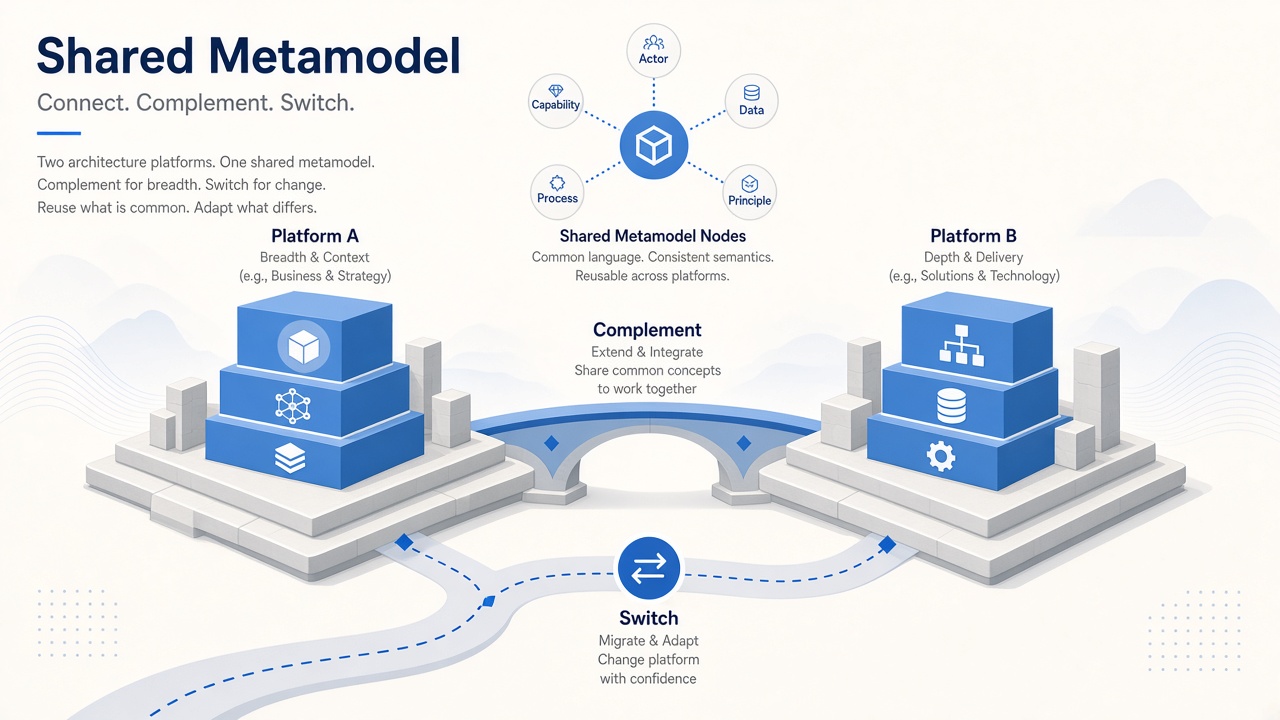
Fair comparison for buyers: DecisionPen covers core EA modelling with LeanIX metamodel support and adds How/Why evidence, incremental modelling, and Ask. Use it alongside LeanIX or switch when coexistence no longer fits.
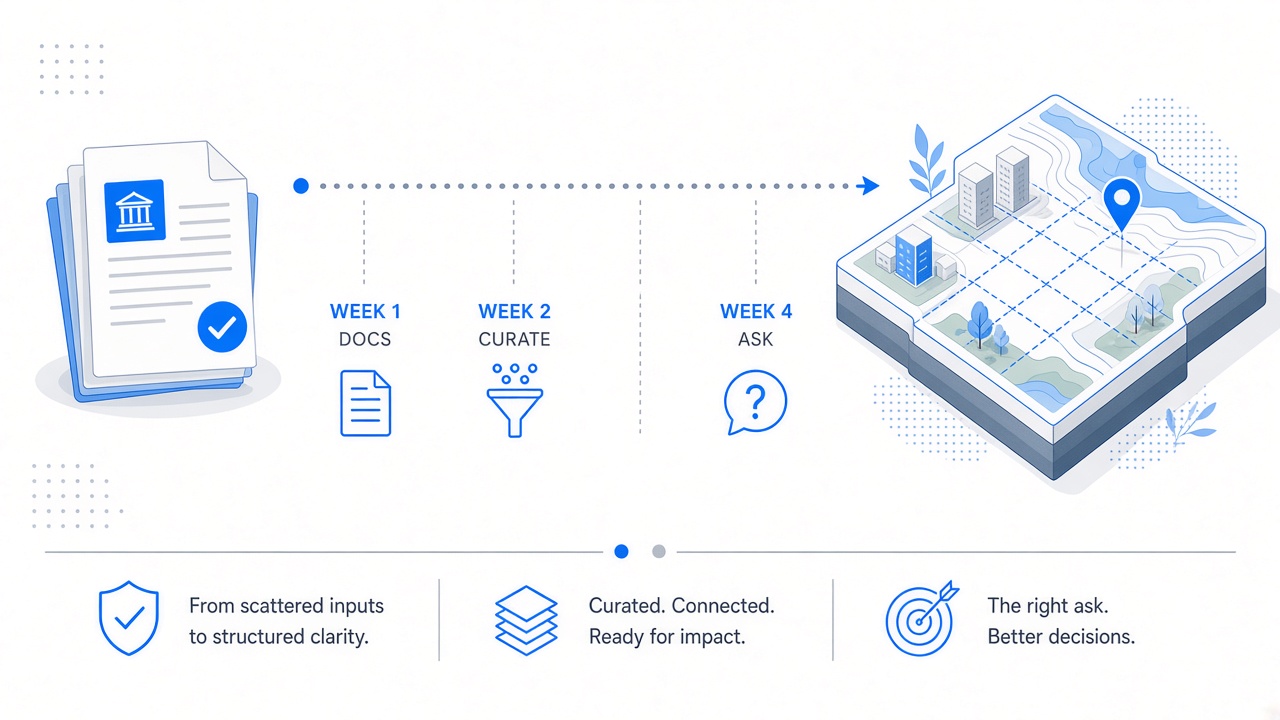
A practical cold-start: ingest the documents you already have, curate a trusted map slice, Ask real questions, and share views — without a year-long baseline project.
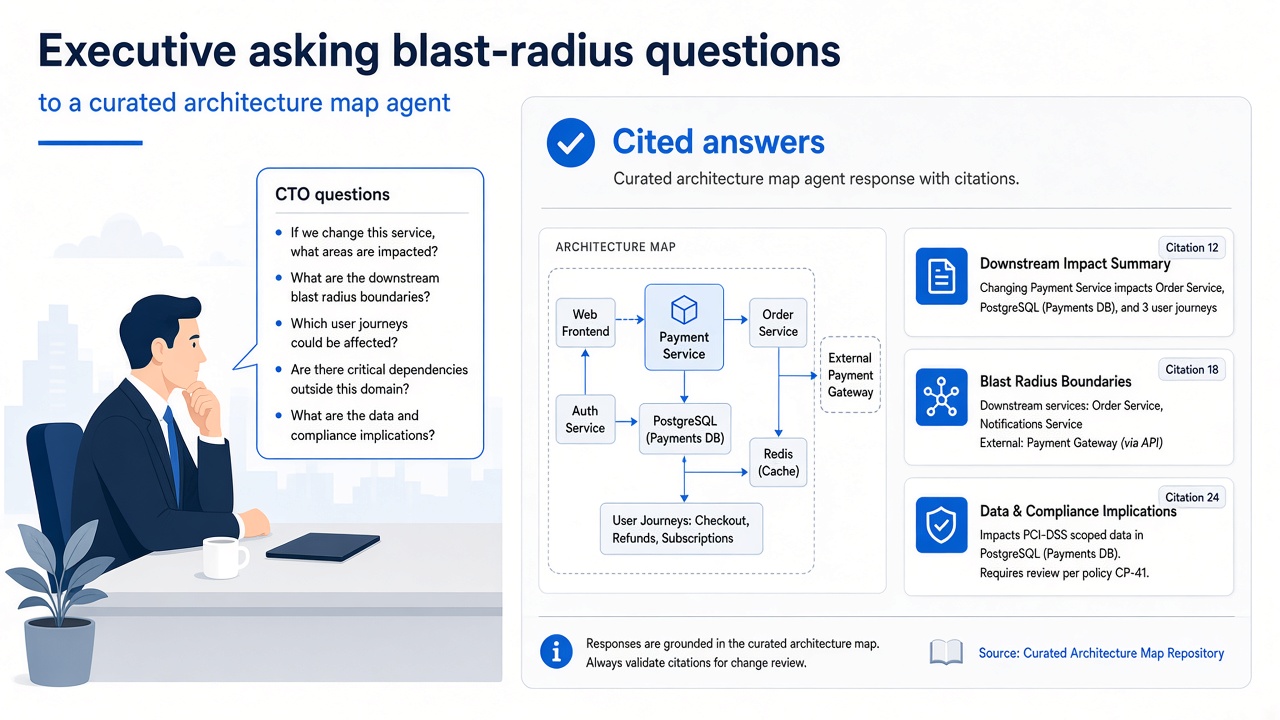
High-leverage questions for map-grounded Ask: blast radius, overlap, rationale, readiness, and gaps — plus how DecisionPen makes answers citable instead of tribal.
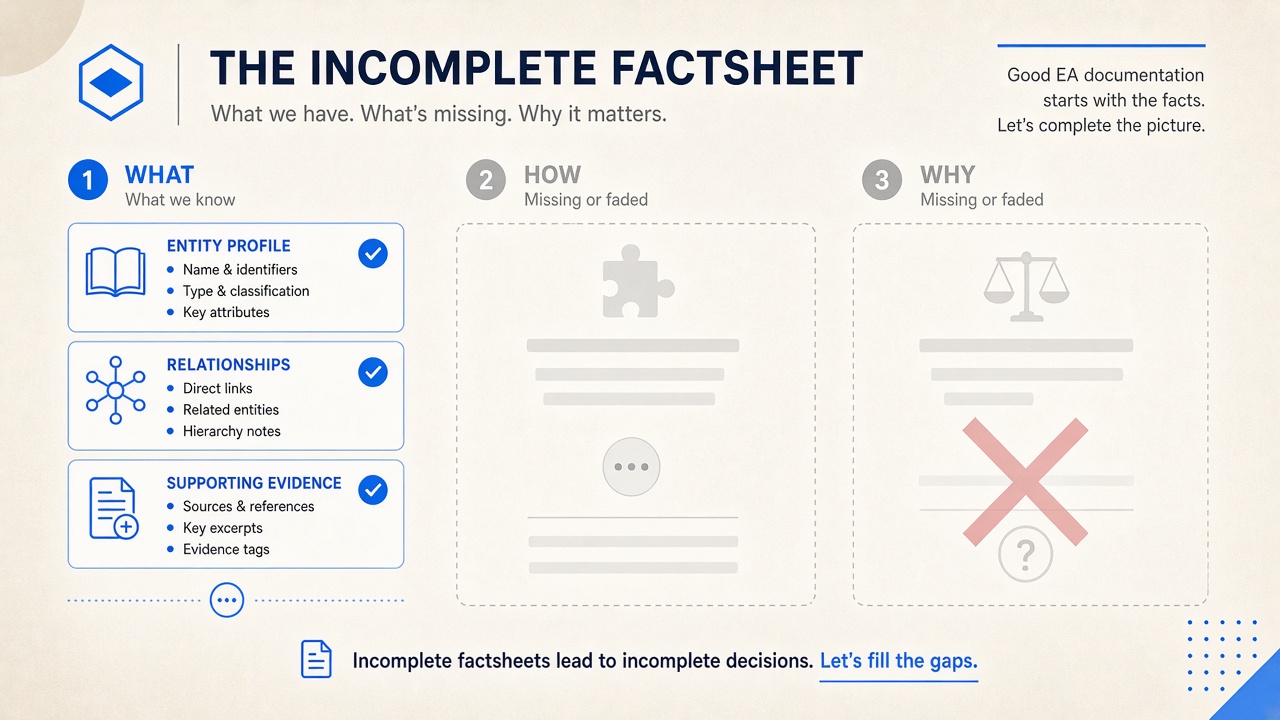
Enterprise architecture factsheets usually capture the What — name, owner, lifecycle. Decision-makers need How systems work and Why choices were made. Here is where that context goes missing, and what to do about it.
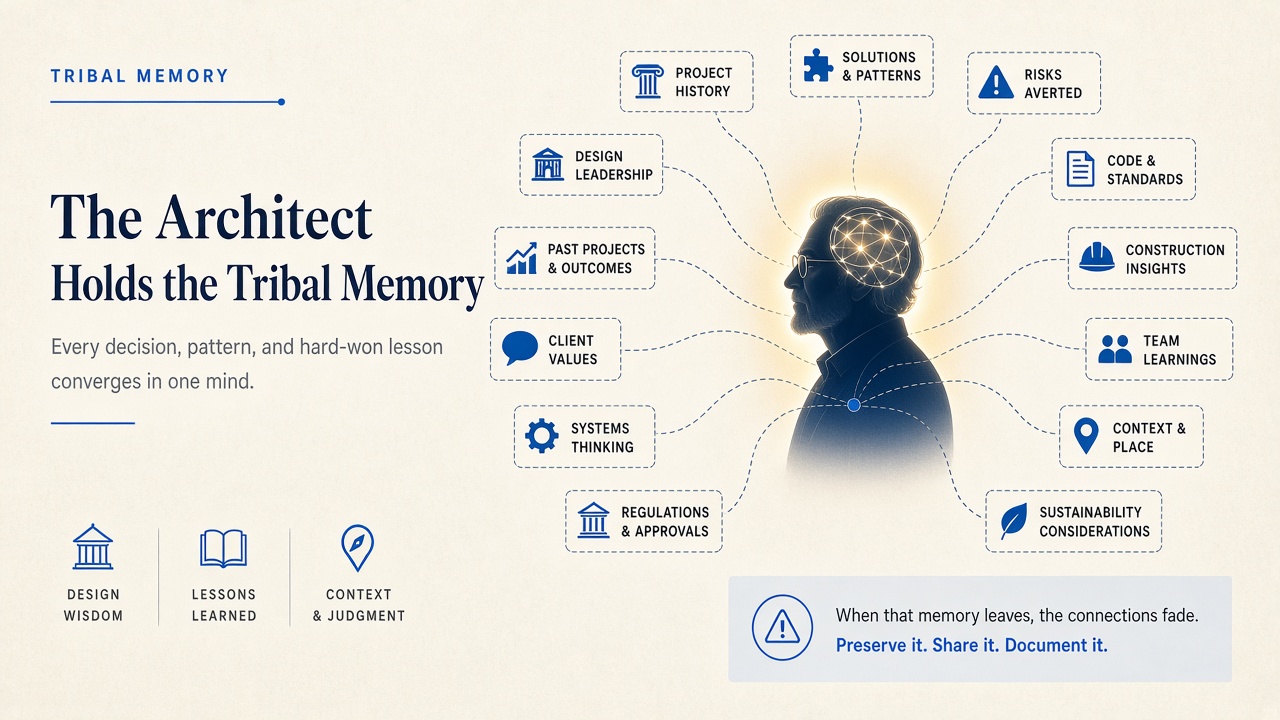
“Let me check with Dave” is not a joke — it is how many enterprises answer blast-radius and dependency questions. Here is why tribal memory becomes a single point of failure, and what a living, queryable context changes.
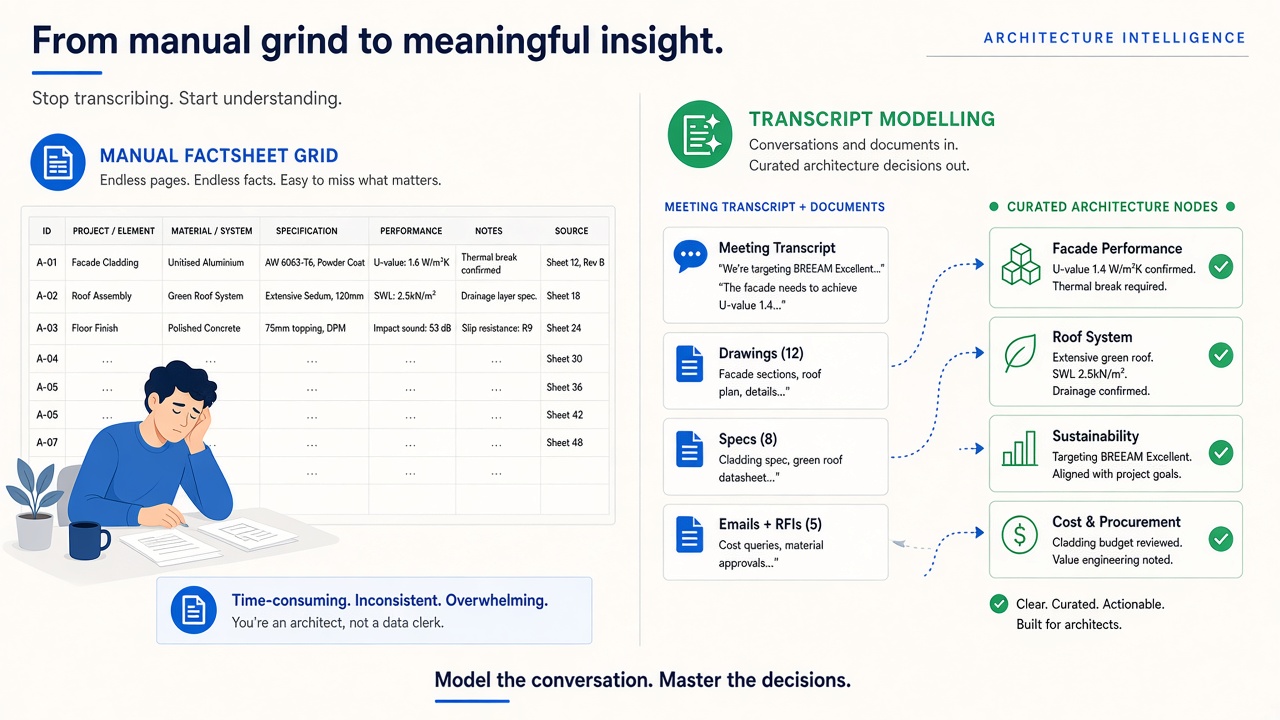
Architects are not lazy. Manual factsheet entry fights incentives and burns senior time. “Easy” enterprise modelling means updating from meetings, transcripts, and documents — then curating — not blank forms.
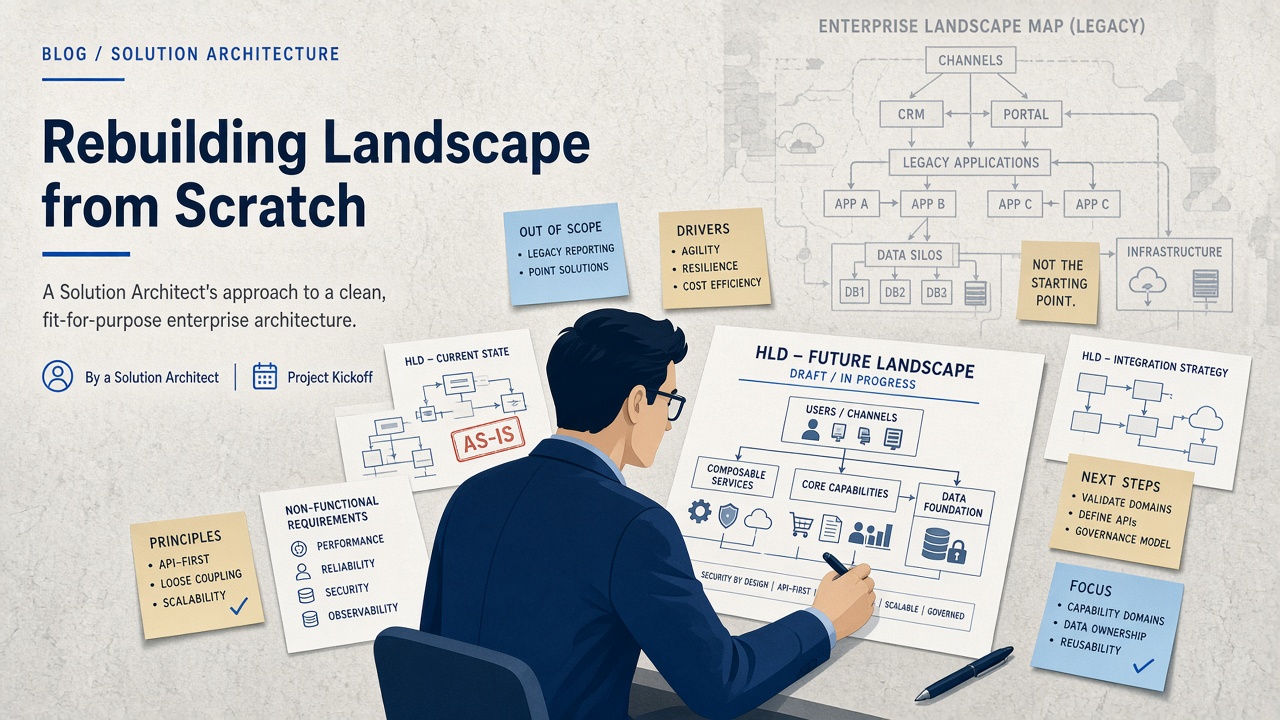
Solution architects often inherit neither a living enterprise map nor How-and-Why context. So every programme restarts discovery — interviews, HLDs from scratch — while the EA repository stays untouched.
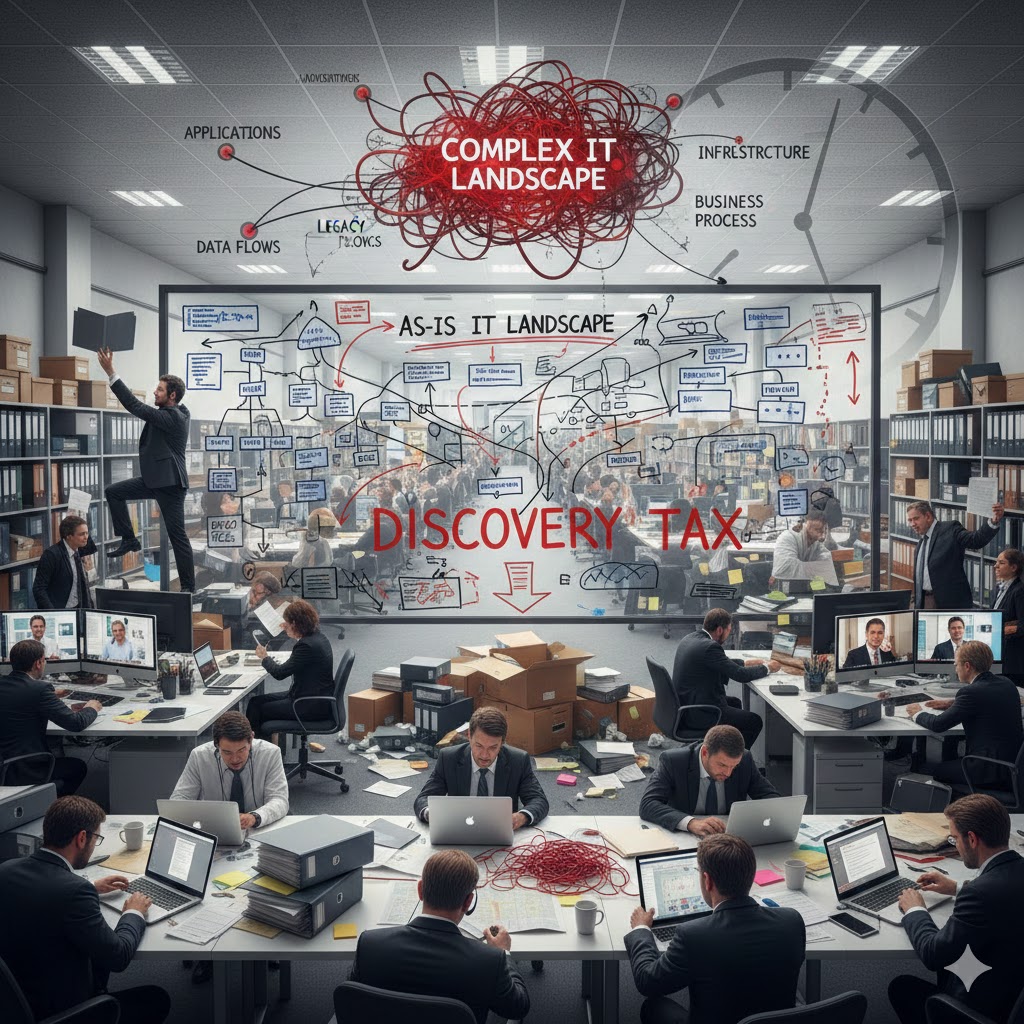
Every major transformation starts with documentation archaeology to map the as-is landscape. The Discovery Tax is the hidden ROI killer — and why manual discovery keeps failing.
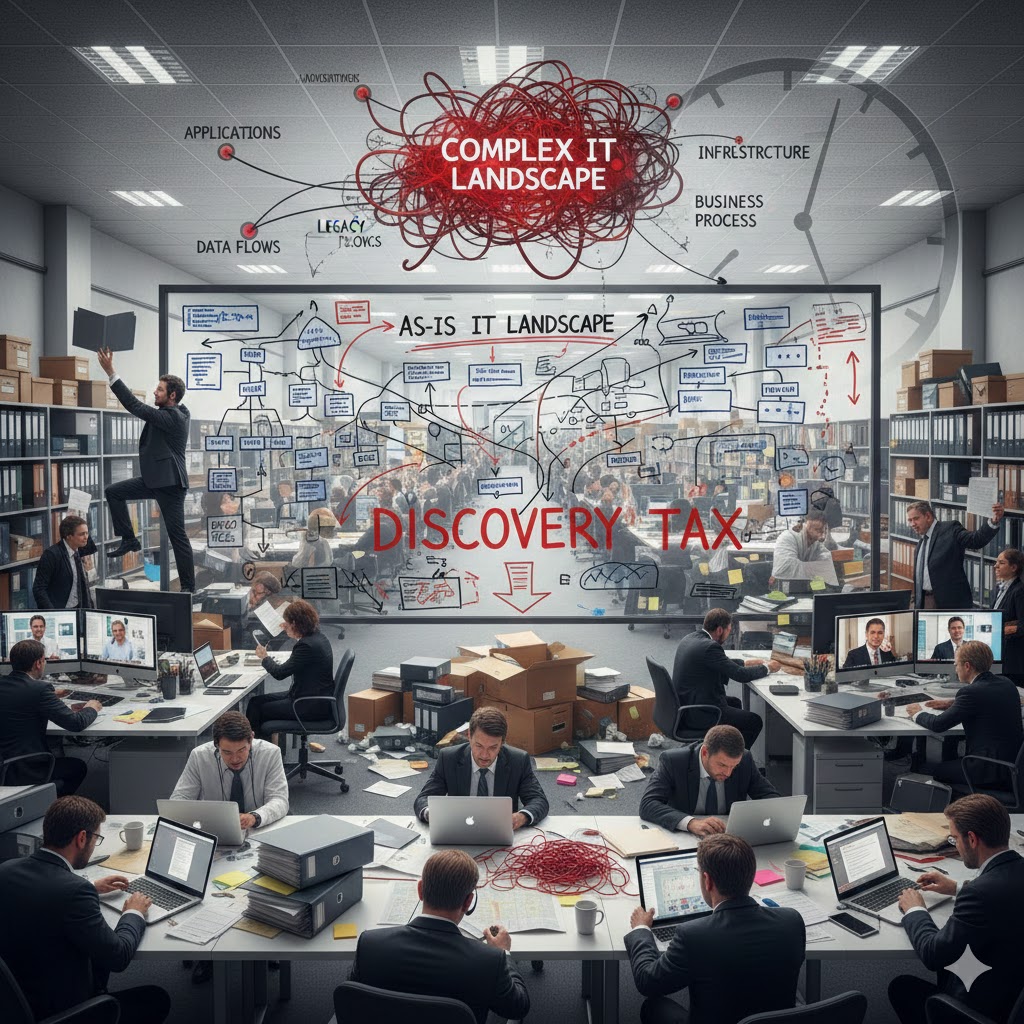
Stop documenting the past. Map the brain of your IT — from messy documents to a structured, living enterprise architecture model with human curation.
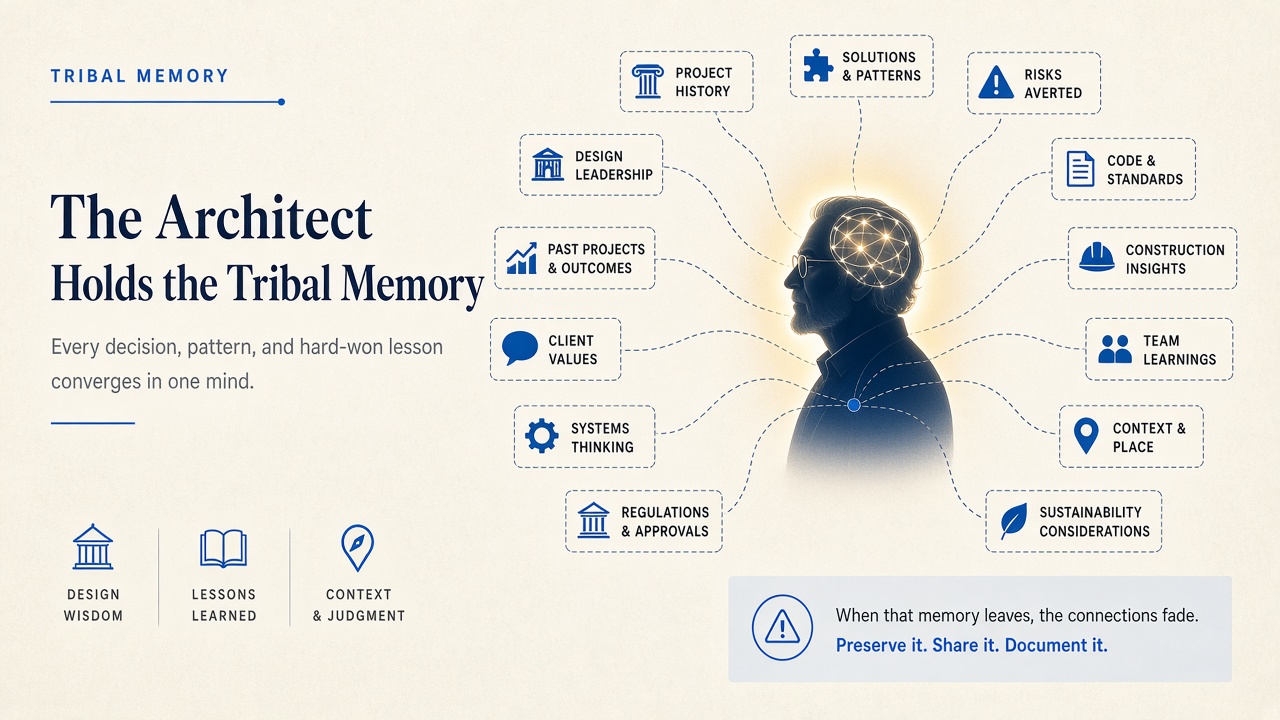
Beyond the Discovery Tax: structured entities and document context must live together, and agents must help keep the landscape current — with human curation — or AI delivery will outrun enterprise memory.
Occasional notes on architecture decision workspaces and living landscapes.
We use optional analytics cookies (Google Analytics) to understand how the site is used. They are set only if you accept. Privacy Policy