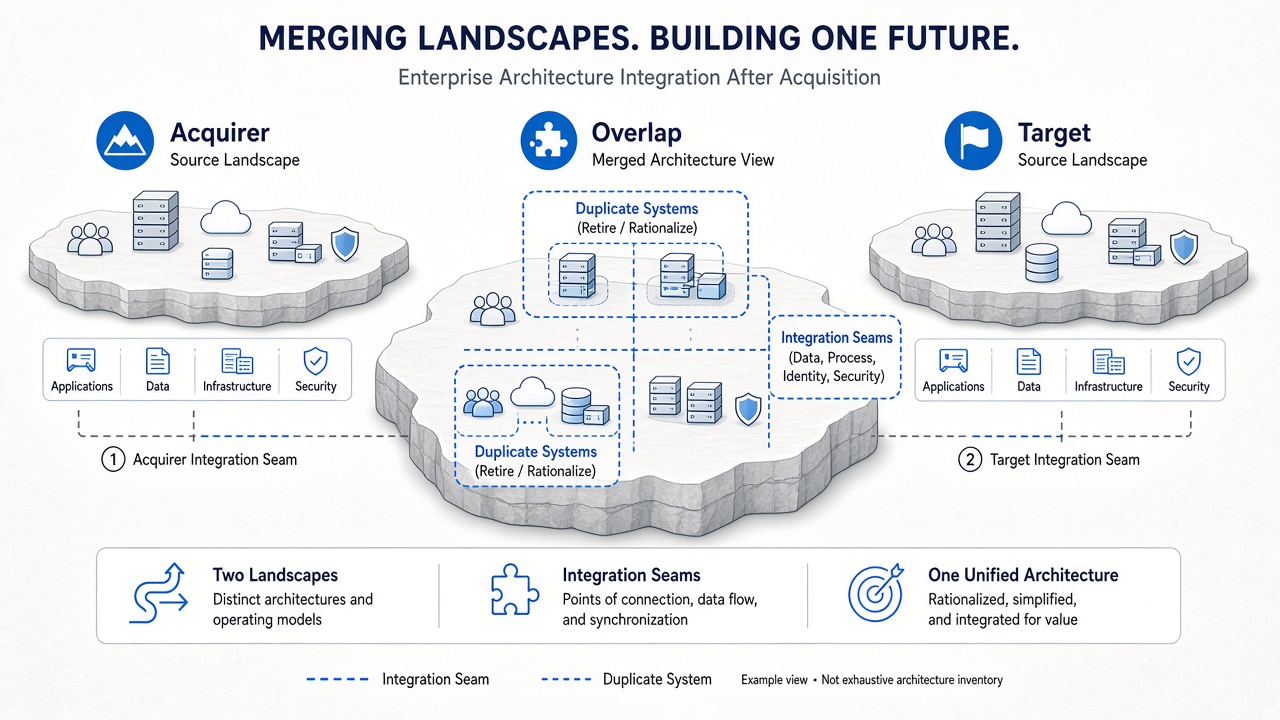
Why does M&A care about enterprise architecture?
Diligence and integration decisions depend on what systems exist, where they overlap, how they connect, and which constraints are non-negotiable — across two organisations, under deal pressure. People search for application overlap due diligence, map IT landscape for merger, EA in post-merger integration. Without shared context, you get tribal briefings and PDF archaeology on both sides.
Why classic EA baselines miss M&A timelines
A twelve-month factsheet programme finishes after synergy decisions are already locked. M&A needs a curated, askable overlap map in days or weeks — the opposite of the empty-repo loop in beyond traditional EA.
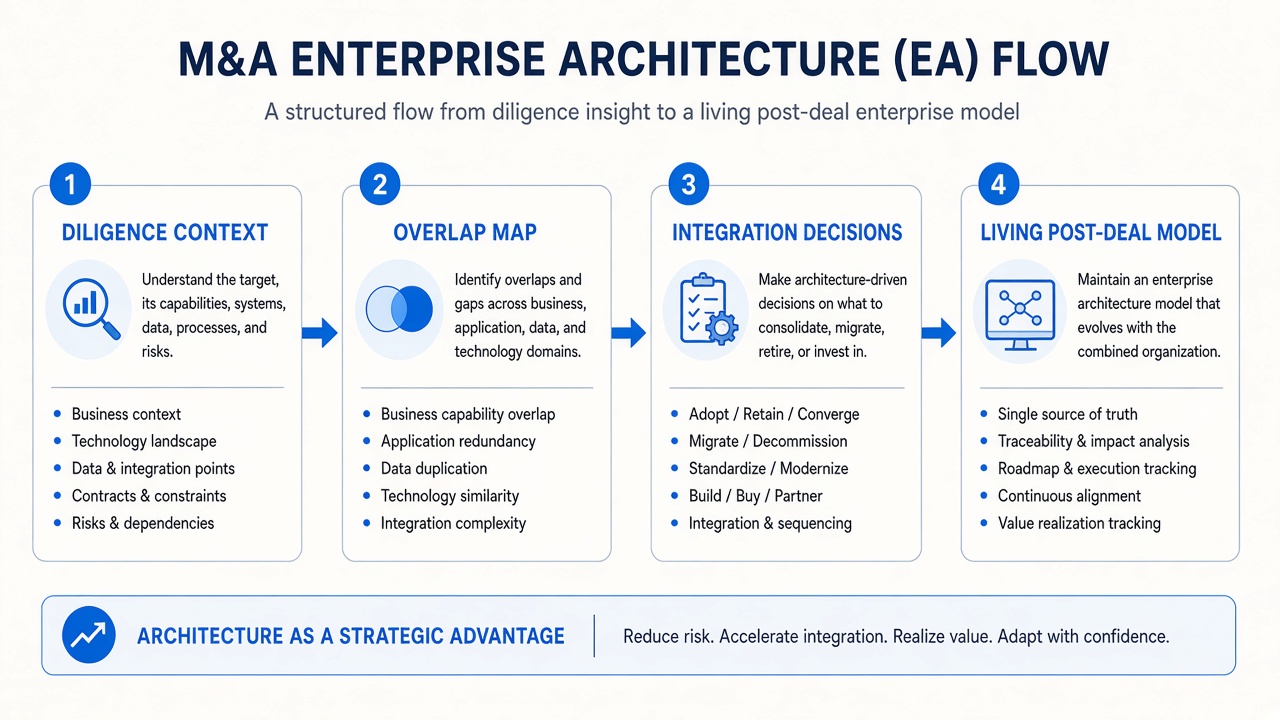
What should an EA tool do for M&A?
- Ingest both sides’ documents and workshop truth quickly.
- Surface overlap, duplicates, and integration seams.
- Keep How/Why evidence — not only system names.
- Answer blast-radius questions during diligence and Day-1 planning.
- Leave a living post-deal model, not a dead deal room folder.
How does DecisionPen solve this?
DecisionPen is built for pressure timelines: discover and curate a useful combined landscape, then decide against it.
- Dual-side intake — incremental modelling from each organisation’s HLDs, inventories, and workshops into one metamodel workspace.
- Overlap you can see — applications, capabilities, and integrations side by side so duplicates and seams are explicit.
- Ask under diligence — Enterprise Ask with citations for impact and dependency questions without waiting on one SME from each company (tribal knowledge risk).
- Integration artefacts as views — generate packs from curated context; write Day-1 decisions back so post-merger memory compounds (docs from living context).
Trial with a sanitized diligence pack for one domain — prove an overlap slice before you bet the integration plan on slideware.
When is DecisionPen not the right tool?
Financial modelling, legal data rooms, and Visio freeform drawing are different jobs. DecisionPen owns living architecture context for diligence and integration — not deal CRM or a diagramming canvas.